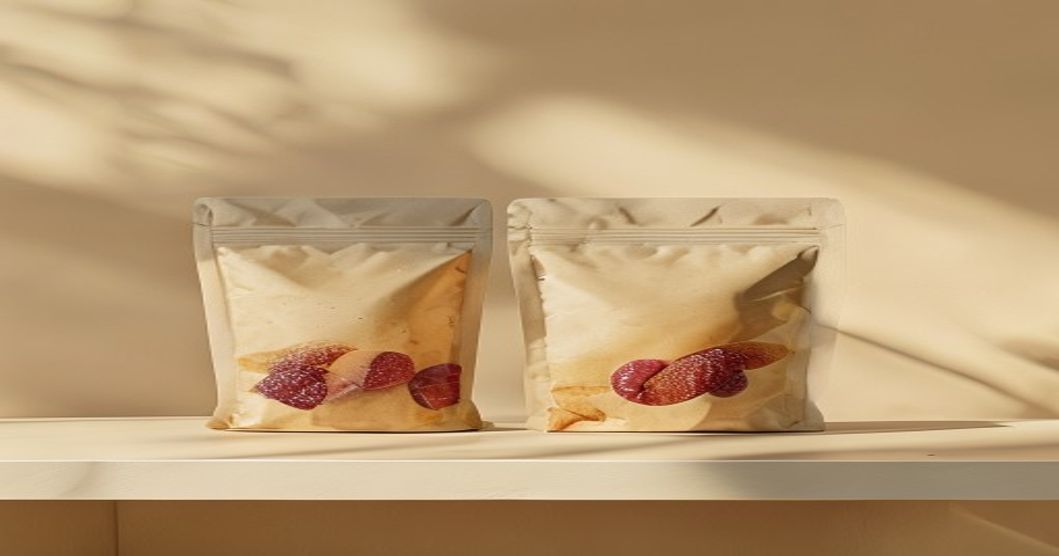
Türkiye grows and dries more apricots, figs and sultanas than almost any country on earth, so a brand looking for a private label dried fruit manufacturer will find no shortage of exporters. The harder question is what happens between the orchard and your branded pack: who dries the fruit and how, who cuts it to the piece size your product needs, who packs it into a doypack with your artwork and a lot code, and who signs the certificate of analysis that your retailer or your importer will ask to see. This guide walks through that chain as Arovela runs it — from geothermal drying at Sındırgı, through cutting, dicing, granulating, powder and purée, to retail-ready packaging and EU replenishment from our Solingen warehouse — so that a buyer can decide what to specify, what to expect, and what to ask before committing.
It is the dried-fruit counterpart to our private label tea bags manufacturer guide. If you are weighing whether to build a brand at all rather than buying bulk fruit and reselling it, the wholesale vs private label comparison is the place to start; this article assumes the private label decision has been made.
What "private label dried fruit" covers at Arovela
Contract manufacturing in this category is not one service but a chain of steps, and a buyer can enter it at different points. Arovela's scope runs across all of them:
- Drying — geothermal drying of fresh fruit at the Sındırgı facility in Balıkesir.
- Processing to specification — slicing, dicing and granulating dried fruit to a defined piece size, plus fruit powder and purée for ingredient and snack applications.
- Retail packaging — filling into stand-up pouches (doypacks) and other consumer formats, with printed film or applied labels, lot and best-before coding, and case packing.
- Documentation and logistics — certificates of analysis on request, lot records, export paperwork, and EU replenishment from the Solingen, Germany warehouse.
A snack brand may need every step; a bakery ingredient buyer may need only diced apricot in bulk cartons with a CoA; a supermarket may need finished retail packs to a fixed specification. The private label snacks production guide describes how a full snack program is scheduled end to end; the sections below break down each step so you can see where your requirement sits.
Step 1 — Geothermal drying at Sındırgı
Sındırgı sits on a geothermal field, and Arovela's drying uses that heat rather than fossil-fuel burners or open sun. The commercial consequences for a private label buyer are practical rather than romantic: controlled, repeatable drying temperature and airflow, no combustion by-products in contact with the fruit, drying that does not depend on weather, and an energy story that can be told honestly on pack. How the process compares with sun and conventional hot-air drying — and where it does not differ — is set out in the geothermal drying B2B guide.
For a brand, the relevant question is which fruits are dried this way and to what moisture and colour targets. Those targets are part of the specification you agree with us, not a fixed catalogue value: a snack pack of soft, plump apricot halves is a different moisture target from apricot dice destined for a granola bar that must not clump.
Step 2 — Fruits in the range
Arovela works with the fruits Türkiye is known for, and each has its own sourcing and quality guide on this site:
- Apricot — the largest volume in the range, from the Malatya growing region; sulphured and unsulphured (natural, dark) grades, whole, halves and cut. See the Malatya dried apricot sourcing guide.
- Fig — Aegean dried figs, whole and processed; the dried figs quality guide covers grades and defects.
- Sultana — Aegean seedless sultanas by size and colour grade; see the Turkish sultana raisins guide.
- Mulberry and sour cherry — white mulberries and dried sour cherries, both strong in the snack and inclusion market; the mulberry and sour cherry supplier guide explains their specifics.
- Apple and plum — dried apple slices, rings and dice, and dried plums, used across snack mixes, breakfast cereals and bakery.
The range is not infinite, and we would rather say so than promise a fruit we cannot source at consistent quality. If your product concept depends on a fruit outside this list, ask early: sometimes we can source it for the program, sometimes the honest answer is that another supplier is a better fit for that line.
Step 3 — Cutting, dicing, granulating, powder and purée
Most private label programs do not want whole dried fruit; they want it in a defined form. Arovela processes dried fruit to specification:
- Slicing for apple rings, apricot strips and fig slices used in snack packs and toppings.
- Dicing to a stated cube size (for example 6–8 mm or 8–10 mm) for cereals, bars, bakery and inclusions — the piece size affects flow, stickiness and how the fruit disperses in a mix, so it belongs in the spec, not in a conversation after delivery.
- Granulating to smaller fractions for coatings, fillings and dusting.
- Powder for smoothies, supplements, bakery premixes and flavouring, and purée for fillings and beverage bases.
The cutting, dicing and granulating specification guide explains how to write a piece-size spec that a factory can actually meet, and the fruit powder and purée contract manufacturing guide covers those formats in detail. Anti-caking treatment, oil coating for diced fruit and moisture targets are all decisions made at this step, and each one shows up on the ingredient list — which is why processing and labelling should be discussed together.
Step 4 — Sulphites and clean-label options
Apricots and some other fruits are traditionally treated with sulphur dioxide (E220) to hold colour and extend shelf life; sorbate is used on some moist fruit against mould. Both are legal in the EU within limits, both must be declared, and sulphites above 10 mg/kg must be emphasised as an allergen on the label. Many retail brands now want unsulphured, additive-free product for clean-label positioning, and geothermal drying with controlled parameters supports that route — at the cost of a darker colour and a shorter shelf life that must be reflected in the best-before date and storage advice.
This is a genuine trade-off, not a marketing choice, and the sulphites and sorbates labelling guide sets it out in detail. State your position in the specification: sulphured to a maximum residual level, or unsulphured with the colour and shelf-life consequences accepted.
Step 5 — Quality documentation
A certificate of analysis is available on request for every private label batch. For dried fruit that typically covers moisture, water activity, sulphite level where relevant, microbiological parameters, and any contaminant tests agreed for the program (aflatoxin on figs, for instance, is a standard expectation for EU import). Reading that document critically is a skill, and the how to read a CoA for dried fruit guide is written for exactly that purpose.
Arovela's management systems are certified to ISO 22000, ISO 9001 and ISO 27001. We list precisely those and no others; if a retailer program requires a certification we do not hold, we will tell you so at the inquiry stage rather than at audit. Each batch carries a lot number that links the CoA, the raw-material record and the finished retail pack, which is what an EU importer's traceability system needs — see the EU food traceability and lot-tracking guide for what your side of that record should hold.
Step 6 — Retail packaging and labelling
Finished retail packaging is part of the scope. The most common format is the stand-up pouch (doypack) with zip closure, filled at 100 g to 500 g for snack retail and larger for food-service; alternatives include flow-wrap for single-serve, printed film or applied labels, and cartons for premium positioning. The doypack retail packaging guide covers film structures, print methods and shelf-life implications for each choice.
The label itself must meet the EU Food Information to Consumers Regulation (EU) No 1169/2011 — name of the food, ingredient list with allergen emphasis, net quantity, best-before, lot, storage conditions, responsible operator's name and address, and a nutrition declaration (which, unlike herbal tea, dried fruit does require). Arovela supplies the ingredient list, nutrition data for the specification, net weight and storage statement, prints the pack, and applies lot and best-before; the brand supplies artwork, legal owner details, GTINs and any claims. That division of labour is set out element by element in the retail-ready packaging and EU labelling guide, and it applies to dried fruit packs in the same way as to tea boxes.
Step 7 — MOQ, lead time and EU replenishment
Minimum order quantities for private label dried fruit depend on the fruit and the format. Whole apricots in a standard doypack behave very differently from a five-fruit granulated blend in a printed film that has to be ordered from a converter, and a single number would mislead in one direction or the other. State the fruit, the form, the pack size and the target quantity, and we quote the minimum that applies — with the reasoning behind it, so you can adjust the format if it helps.
Lead time depends on the same variables plus the season: fresh-fruit drying is harvest-linked, whereas processing and packing of dried stock is not, and packaging film with custom print usually sets the critical path on a first order. Ask for a scheduled date against approved specification and artwork, and plan reorders around it.
For buyers in Germany, France, the Netherlands and neighbouring markets, Arovela's Solingen warehouse holds stock inside the EU for replenishment orders. That shortens the second and subsequent deliveries considerably and puts the goods in free circulation before they reach you; the private label dried fruit guide for German and French retail discusses how that changes the working-capital picture for a retail listing. Whether a given program ships direct from Türkiye or via Solingen is decided on volume and cadence, and it is worth raising in the first inquiry.
From spec sheet to delivery: who does what
The table below is the process as it actually runs, with the buyer's input and Arovela's output at each step. Use it as a checklist for the first specification meeting.
| Process step | What the buyer specifies | What Arovela delivers |
|---|---|---|
| Fruit and grade | Fruit, variety or region where relevant, sulphured / unsulphured, size or colour grade | Availability by season, grade sheet, sample from current stock |
| Drying | Target moisture and texture; any colour or additive constraint | Geothermal drying to target, moisture and water-activity result per batch |
| Processing | Form (whole, half, slice, dice, granule, powder, purée), piece size, anti-caking or coating preference | Processing to spec, sieve or piece-size verification, ingredient list impact |
| Quality plan | Required tests (micro, contaminants, sulphite), retailer test frequency | Certificate of analysis on request, lot record, sample retention |
| Packaging | Format, pack weight, film or label type, artwork on our die-line, GTIN, legal owner details | Filled and sealed retail packs, printed to approved artwork, lot and best-before applied |
| Case and pallet | Units per case, case label content, pallet type | Case-packed, labelled, palletised to spec |
| Documents | Import market, importer of record, any retailer forms | Commercial documents, lot documentation, export paperwork; CoA on request |
| Delivery | Incoterm, destination (own warehouse, 3PL, retailer DC), cadence | Direct shipment from Türkiye or replenishment from Solingen |
The step buyers most often skip is the quality plan. Agreeing the tests, the frequency and the acceptance limits before the first batch means the CoA arriving with delivery two answers the retailer's questions rather than raising new ones.
Structuring a first program
A sensible first program keeps three things narrow: the number of fruits, the number of pack sizes and the number of artworks. One or two fruits in one doypack size, with a straightforward spec, gets you to a real product on a real shelf with the least capital and the fewest moving parts. Once sales data exists, extending the range — a mixed pack, a diced ingredient line, a powder for a functional product — is a matter of adding a specification, not restarting the program.
Supermarket private label follows a stricter path (tender documents, retailer specifications, audit requirements) and is covered separately in the supermarket private label supplier guide. E-commerce and independent-retail brands have more freedom to start small and iterate, and the same is true of a combined tea-and-fruit range: the two categories share documentation, logistics and, often, the same shelf.
FAQ
What is the minimum order for private label dried fruit?
It depends on the fruit and the format. Whole fruit in a standard pouch, diced fruit in bulk cartons and a custom multi-fruit blend in printed film each have different minimums, driven by processing setup and packaging material. Send the fruit, form, pack size and target quantity and we quote the applicable minimum with the reasoning behind it.
Which fruits can Arovela process and pack under my brand?
Apricot, fig, sultana, mulberry, sour cherry, apple and plum are the core range, in whole, cut, diced, granulated, powder and purée forms depending on the fruit. If your concept needs a fruit outside this list, ask at the inquiry stage; we will say clearly whether we can source it for the program.
Do you offer unsulphured or additive-free dried fruit for clean-label brands?
Yes. Unsulphured apricots and other additive-free options are available, with the darker colour and shorter shelf life that go with them. Sulphured grades are also available within EU limits, and both routes are declared correctly on the ingredient list we supply for your label.
What documentation comes with each batch?
A lot record linking raw material to finished pack, plus commercial and export documents; a certificate of analysis for the batch (moisture, water activity, sulphite where relevant, microbiology and any agreed contaminant tests) is provided on request. Arovela operates under ISO 22000, ISO 9001 and ISO 27001; we do not claim certifications beyond those three.
Can EU orders be replenished from stock inside the EU?
Yes. Arovela's warehouse in Solingen, Germany, holds stock for EU replenishment, which shortens repeat deliveries and puts goods in free circulation before they reach you. Whether a program uses Solingen or ships direct from Türkiye depends on volume and cadence, and is agreed at the quotation stage.
Ready to turn a specification into a branded product? Send the fruit, form, pack size, target quantity and delivery market, and request a quote — we respond with the applicable minimum, the schedule from approved spec and artwork, and the documentation package for your batch.