A category manager evaluating a new private label supplier for herbal tea or dried fruit is not really buying tea or apricots. They are buying the absence of problems: no out-of-stocks in week six, no label recall, no audit finding that lands on their desk, no supplier who promised a capacity they did not have. This guide is written for that reader — retail chain category and procurement managers, and the sourcing consultants who work for them — and it describes what a manufacturer should be able to show you, where the common gaps are, and how Arovela specifically answers each question. Where our answer is "we do not hold that", we say so, because a supplier who is precise about what they lack is easier to plan around than one who is vague about what they have.
Start with capacity, and insist on a number
The most common failure in retail private label is not quality; it is a supplier accepting a listing they cannot supply at replenishment cadence. Ask for capacity as a number, not an adjective.
Arovela's answer for tea bags: our packing machine produces roughly 1,000 tea bags per hour. That is a small-batch line by design, and we would rather tell you so at the first meeting than discover it together during a promotional peak. What it means in practice:
- Entry tier: 5,000–20,000 bags per SKU, 2–4 weeks. Suited to regional listings, test-and-learn programmes, seasonal or limited-edition SKUs, and steadily growing own-brand ranges in specialty and premium supermarket formats.
- Mid tier: 50,000–100,000 bags per SKU, 4–6 weeks. Suited to a permanent listing in a regional chain or a defined store cluster, with reorder cadence planned around the same window.
If your programme requires several hundred thousand bags per SKU per month across a national estate, that is not what our tea line is built for and we will say so rather than over-promise. What our capacity does give you is flexibility — the ability to run three or four blends in modest quantities, react to a category review, or trial a new format without a six-figure commitment. Bag formats are single-chamber flat, string and tag, and individually enveloped; we do not run double-chamber bags. Details on the tiers are in our MOQ and lead time guide.
For dried fruit the answer is necessarily different because capacity depends on the fruit, the format and the season. Whole and halved geothermal-dried fruit at Sındırgı, sliced or diced fruit cut to a specification, granulates, and fruit powder or purée each occupy the line differently, and harvest timing sets the ceiling for any single fruit. We quote dried fruit capacity per SKU against your forecast rather than publishing a single number that would be misleading across formats. Our private label dried fruit manufacturer guide sets out the range.
The documentation you will ask for — and what you will get
Retail supplier onboarding is a document exercise before it is a tasting exercise. The typical request list, and Arovela's position on each:
- Food safety and quality management certification. Arovela holds ISO 22000 (food safety management), ISO 9001 (quality management) and ISO 27001 (information security management, relevant to how your specifications, artwork and commercial data are handled). Many retailers ask for BRCGS or IFS certification as a preferred or default requirement; Arovela does not currently hold BRCGS or IFS. What we offer instead is the ISO 22000 system, full transparency on the hazard-analysis and control procedures documented within that system, openness to your own second-party audit, and analytical evidence per batch on request. Some retail programmes accept an ISO 22000 supplier subject to their own audit; others do not. It is better to establish which category your programme falls into at the first conversation than at listing stage. Our note on what ISO and other schemes actually signal to a B2B buyer may help frame the internal discussion.
- Certificate of Analysis on request. A CoA is available on request for each production lot, covering the parameters agreed in the specification — moisture, sensory, foreign matter, and the microbiological and contaminant tests specified for the product. For dried fruit, sulphite and preservative status is stated. If your team wants a refresher on reading these documents, see how to read a CoA for dried fruit.
- Traceability. Every lot number on the retail pack traces back to raw-material batches, processing records and release. This is the operator's obligation under the EU General Food Law and it is also what makes a targeted withdrawal possible instead of a category-wide one. Our EU lot traceability guide explains how the chain is documented.
- Specification sheet per SKU. See the next section.
- Allergen and additive declarations. Cross-contact statement, sulphite and sorbate status for dried fruit — see our sulphites and sorbates labelling note — and any processing aids.
- Site and company information. Production at Sındırgı, Balıkesir (geothermal drying and tea packing) and the Solingen, Germany warehouse; management-system certificates and their scopes on request.
We deliberately do not claim organic, halal, kosher, GMP or FSSC certification for these product lines. If a listing requires one of those, tell us early: it changes whether we are the right supplier for that specific SKU, and neither of us benefits from finding out later.
Specification sheets: the document that prevents disputes
A retail private label programme lives or dies on the specification. For tea, the sheet should fix the recipe (botanicals and percentages), cut size, bag weight, bag format, bags per unit, unit dimensions and weight, case configuration, shelf life and storage, artwork version, and the analytical parameters that the CoA will report against. For dried fruit it should fix the fruit variety and grade, cut and size tolerance, moisture range, sulphite/preservative status, colour and defect tolerances, packaging format and net weight, case configuration, shelf life and the same analytical framework.
Arovela drafts the specification with you during sampling and treats the signed version as the reference for every subsequent run. Reorders are produced to the signed specification; changes are agreed in writing and versioned. This sounds procedural because it is — and procedure is exactly what a category manager should want from a supplier.
Audit readiness
Retail buyers audit. Sometimes it is a desk audit of documents; often it is a site visit by the retailer's technical team or a third party they appoint. A supplier who is audit-ready keeps its ISO 22000 documentation current, can walk an auditor through raw-material intake, processing, packing, release and traceability records without preparation time, and can show the corrective-action history rather than hiding it.
Arovela welcomes second-party audits at Sındırgı. We recommend scheduling them after sampling and before the first commercial run, so that any observation from your team can be closed in the specification rather than in a live listing. If your programme's audit checklist is built around a scheme we do not hold, we will tell you which points our system covers in a different form and which it does not.
Packaging for the shelf
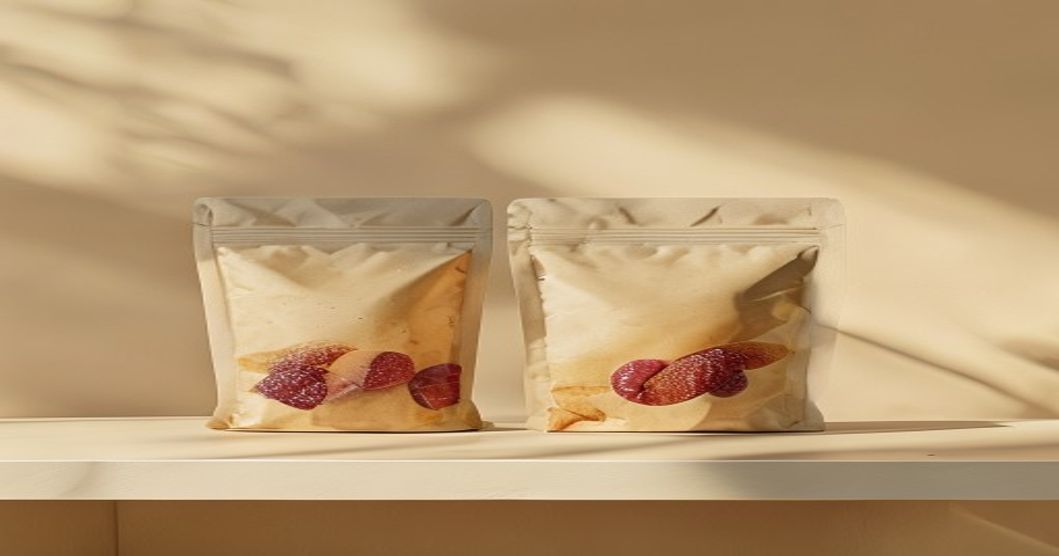
Retail-ready packaging is part of the service, and it is where private label differs most from bulk supply. For tea, Arovela produces the finished unit — bags in the chosen format inside a printed outer box, with label printing — so the case that arrives at your distribution centre is shelf-ready. For dried fruit, the standard retail formats are stand-up doypacks (with or without window and zipper), flow packs for snack portions, and cases configured to your planogram; see the doypack retail packaging guide for formats and material options.
Labelling for the EU consumer is governed by Regulation (EU) No 1169/2011 (food information to consumers): name of the food, ingredient list with allergen emphasis, net quantity, date marking, storage conditions, responsible operator's name and address, origin where required, minimum font size, and the language of the market. On a private label pack the responsible operator is normally the retailer, so your own labelling team owns the compliance sign-off; we print approved artwork on our dielines and flag omissions we notice. Our tea packaging and EU compliance guide covers box formats and the recurring artwork errors.
Replenishment from the EU: the Solingen warehouse
Producing in Türkiye and supplying European retail works well when the logistics are structured for it. Arovela's warehouse in Solingen, Germany, allows agreed stock to sit inside the EU in free circulation, so replenishment orders to your DC are intra-EU deliveries with short transit and no customs step at call-off. The pattern that works: production runs to forecast, transfer to Solingen, call-offs against your replenishment cadence. Whether a given SKU should be held at Solingen or shipped direct depends on volume, shelf life and your DC's ordering rhythm; we structure this at quote stage. Import mechanics for direct shipments are covered in our step-by-step import guide.
Seasonal planning for dried fruit
Tea is a year-round packing operation with stable raw-material availability. Dried fruit is agricultural, and a retail programme has to respect the harvest. Apricots, figs, grapes, mulberries, sour cherries and other fruit each have a harvest window; the drying window follows; and the year's supply is fixed at that point. For a private label listing this means:
- Annual volumes for a fruit SKU should be forecast before that fruit's harvest, so raw material can be secured.
- Specifications that depend on a particular grade or size need to be agreed early, because grade availability is a harvest outcome.
- New fruit SKUs are best launched in step with the season, not against it.
Geothermal drying at Sındırgı gives us process control and energy stability that conventional drying does not — see the geothermal drying B2B guide — but it does not change the calendar. Our Turkish dried fruit harvest and export calendar is the planning reference we share with retail buyers.
The evaluation matrix
| Evaluation criterion | What to ask | What a good answer looks like |
|---|---|---|
| Capacity | "What is your output per hour and your realistic run size per SKU?" | A number and a tier structure. Arovela: ~1,000 tea bags/hour; 5,000–20,000 bags in 2–4 weeks; 50,000–100,000 in 4–6 weeks. Dried fruit quoted per SKU and season. |
| Certification | "Which certificates do you hold, with scope and expiry?" | Exact list, no padding. Arovela: ISO 22000, ISO 9001, ISO 27001. Not BRCGS/IFS — stated openly, with second-party audit offered. |
| Batch evidence | "Do you issue a CoA per lot, and against which parameters?" | Yes, per lot on request, against the signed specification; sample CoAs available before the first order. |
| Traceability | "Can you trace a retail lot number back to raw-material batches?" | Yes, with records available on request and within a defined response time. |
| Specification discipline | "How are specifications agreed and how are changes handled?" | Written spec drafted at sampling, signed before first run, versioned on change. |
| Audit readiness | "Can our technical team audit the site, and when?" | Yes; scheduled between sampling and first commercial run; documentation available without preparation time. |
| Packaging | "Do you deliver shelf-ready units, and who owns label compliance?" | Yes — printed box or doypack, case-configured; retailer owns FIC sign-off, supplier prints approved artwork and flags omissions. |
| EU replenishment | "Can you hold stock inside the EU?" | Yes — Solingen, Germany warehouse; call-offs as intra-EU deliveries. |
| Seasonality | "How do you secure dried fruit volume for the year?" | Forecast before harvest, raw material secured against it, grade agreed early. |
| Service scope | "Can you develop blends, pack our own raw material, or supply full-service?" | All three, plus retail-ready box and label print; customer chooses scope per SKU. |
Where Arovela fits — and where it does not
Arovela is a good fit for retail private label programmes that value flexibility over sheer scale: regional chains, specialty and organic-oriented supermarket formats, premium own-brand ranges, seasonal and limited-edition SKUs, and national retailers testing a category before committing volume. It is a poor fit for a programme that requires BRCGS or IFS as a non-negotiable listing condition or that needs mass-market tea volumes on a weekly cadence. Knowing that at the outset saves both sides a sampling cycle. If a wholesale supply of bulk botanicals or dried fruit for your own repacking is the better route for a given category, we cover that comparison in wholesale vs private label, and our earlier note on private label dried fruit for German and French retail covers market-specific detail.
FAQ
Does Arovela hold BRCGS or IFS certification?
No. Arovela holds ISO 22000, ISO 9001 and ISO 27001. Many retailers list BRCGS or IFS as a preferred requirement; we state openly that we do not hold them, and we offer second-party audits at our Sındırgı site, the documented control procedures of our ISO 22000 system, and batch-specific Certificates of Analysis on request instead. Whether that is acceptable depends on your programme's rules, which is why we raise it at the first meeting.
What tea bag volumes can Arovela supply for a retail listing?
Our tea bag machine produces roughly 1,000 bags per hour. Entry tier is 5,000–20,000 bags per SKU in 2–4 weeks; mid tier is 50,000–100,000 bags per SKU in 4–6 weeks. We are built for flexible small-to-mid batches rather than national mass-market volumes, and we say so rather than accept a listing we cannot replenish.
How is dried fruit capacity determined?
Per fruit, per format and per season. Whole and halved fruit, sliced or diced product to specification, granulates and powder or purée each use the Sındırgı line differently, and the harvest fixes the annual raw-material ceiling. We quote dried fruit capacity against your SKU forecast, ideally before that fruit's harvest.
Can stock be held inside the EU for replenishment?
Yes. Arovela operates a warehouse in Solingen, Germany. Agreed stock can be held there in free circulation so that call-offs to your distribution centre are intra-EU deliveries. Whether a SKU is routed via Solingen or shipped direct is decided at quote stage on volume, shelf life and ordering rhythm.
Who signs off the label on a private label pack?
The food business operator under whose name the product is sold — normally the retailer — is responsible for the mandatory information under Regulation (EU) No 1169/2011. Arovela prints approved artwork on its dielines and flags omissions it notices, but the compliance sign-off sits with your labelling team.
Ready to evaluate us against your onboarding checklist? Request a quote with the SKUs, target volumes, delivery country and any listing conditions your programme requires — pricing depends on blend or fruit, format and volume, and we will respond with capacity per SKU, documentation samples and a realistic timeline.