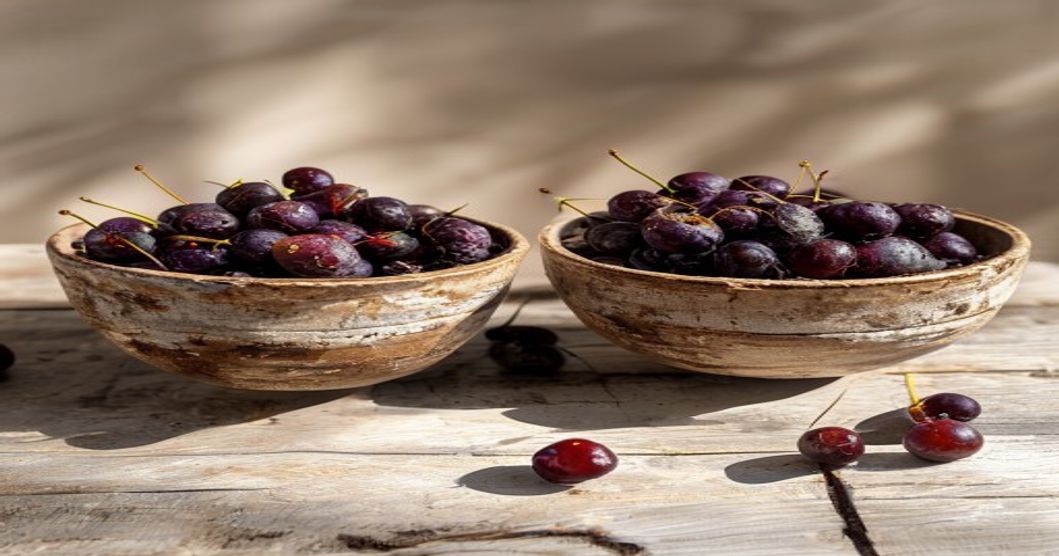
Key takeaways
- Dried white mulberries (Turkish dut) and dried sour cherries (Turkish vişne) are two of Türkiye's distinctive specialty dried fruits — naturally sweet mulberries and tart, ruby-red sour cherries that bring flavour and visual contrast to muesli, snack mixes, bakery, and confectionery.
- The two fruits behave very differently in procurement: mulberries are naturally sweet and additive-free, while sour cherries are commonly offered in two formats — sweetened (sugar-infused) and no-added-sugar — and that single choice drives moisture, shelf life, price, and label claims.
- For B2B buyers, the decisions that matter are grade and size, target moisture and water activity, added-sugar vs no-sugar, packaging format, and MOQ — all of which should be locked into the purchase specification rather than assumed.
- Always demand a batch Certificate of Analysis (COA) covering aflatoxin and ochratoxin A, pesticide residues, microbiology, moisture/water activity, and (for confectionery and infant-adjacent uses) added-sugar declaration.
- Arovela supplies Turkish specialty dried fruit, geothermally dried, from a Sındırgı (Balıkesir) facility with a warehouse in Solingen, Germany for short EU lead times, backed by ISO 22000, ISO 9001, and ISO 27001 documentation and batch-specific COA on request.
Introduction: two Turkish fruits that earn their place on a spec sheet
If you are sourcing for muesli, trail mix, bakery, or confectionery, finding a dried mulberries wholesale supplier who can also deliver consistent sour cherries is a genuine advantage — it consolidates two specialty lines, one origin, and one document pack under a single relationship. Both fruits are firmly associated with Türkiye, and both reward buyers who specify tightly and verify on paper.
White mulberries are one of the few dried fruits that arrive on the table sweet without any added sugar — the fruit concentrates its own sugars as it dries, giving a honeyed, almost caramel note and a soft, chewy bite. Sour cherries are the opposite character: bright, tart, and intensely coloured, they cut through granola and cereal bars, lift dark-chocolate inclusions, and give baked goods a fruit-forward acidity that raisins and dates cannot.
This guide is written for procurement managers and product developers at muesli houses, snack brands, bakeries, and confectioners. It explains the grades and sizes you will be quoted, the moisture and water-activity targets that govern shelf life, the all-important added-sugar vs no-added-sugar decision for sour cherries, realistic MOQ and packaging formats, and exactly which COA parameters to demand. If you are building a broader Turkish dried-fruit programme, pair this with our wholesale dried fruit Türkiye sourcing guide for the category fundamentals.
Dried white mulberries (dut): the naturally sweet specialty
What they are
Turkish dried white mulberries come from the white mulberry tree (Morus alba), grown widely across Anatolia — the high, dry plateaus of the east and the Aegean interior are both classic mulberry country. Ripe berries are harvested in mid-to-late summer and dried until they reach a soft, pale-tan, chewy state. Unlike most dried fruit, they are typically sold plain: no added sugar, no oil, no sulphur dioxide, because the fruit is already sweet and pale.
That additive-free profile is exactly why mulberries have become a clean-label favourite in muesli, raw bars, and "no nasties" snack mixes. They contribute natural sweetness and bulk, which can let a formulator dial back refined sugar elsewhere in a recipe.
Grades and what affects them
Mulberries are graded primarily on colour uniformity, size, intactness, and freedom from stems and foreign matter. Premium lots are uniformly pale, whole, soft, and clean; lower grades carry more broken berries, darker or caramelised pieces, residual stalks, and a higher fines fraction. Because mulberries are delicate, the broken/whole ratio is a real quality lever — specify it if intact berries matter to your pack (for example, in a visible topping versus a milled ingredient).
Where they fit in your product
- Muesli and granola: natural sweetness and soft texture; pairs with oats, nuts, and seeds.
- Snack and trail mixes: an additive-free sweet note alongside nuts and other dried fruit.
- Raw and cereal bars: binds and sweetens without added sugar.
- Bakery and confectionery: as an inclusion in breads, energy balls, and chocolate.
Dried sour cherries (vişne): tart, ruby, and format-driven
What they are
Dried sour cherries come from the sour cherry tree (Prunus cerasus) — vişne in Turkish — which Türkiye grows in large quantities and which is prized for a tartness far sharper than sweet (dessert) cherries. After pitting, the cherries are dried into dark-red, pliable pieces with a concentrated sweet-tart flavour and a colour that survives baking well.
The decision that defines the order: added sugar vs no added sugar
This is the single most important choice when buying dried sour cherries, and it changes almost everything downstream:
- Sweetened / sugar-infused sour cherries. Because raw sour cherries are very tart and naturally low in sugar, a large share of the market is infused with sugar (often as sucrose or fruit-juice concentrate) before or during drying. This softens the acidity, improves pliability, and is the format most confectionery and many bakery applications expect. It also means the ingredient is not "no added sugar," which must be reflected on your finished-product label and sugar declaration.
- No-added-sugar sour cherries. A genuinely additive-free, no-sugar-added dried sour cherry is available but is markedly more tart, often firmer, and typically a premium, lower-yield product. It is the right choice for clean-label, "no added sugar," or reduced-sugar positioning — but specify it explicitly, because the sweetened format is the market default.
Treat "dried sour cherries" as two distinct products on your purchase order. Confusing them is the most common and most expensive error in this category, exactly because the visual difference is small but the label, taste, and price differences are large. Some lots are also lightly treated with a food-grade humectant (for example, a small amount of vegetable oil or glycerine) to keep pieces separated — confirm whether that suits your clean-label claim.
Where they fit in your product
- Bakery: muffins, scones, fruit breads, and cookies, where the colour and acidity hold up to heat.
- Confectionery: chocolate-coated cherries, fruit-and-nut bars, and pralines.
- Muesli and cereal: a tart counterpoint to sweet flakes and nuts.
- Snacking: straight or in mixes, especially in the sweetened format.
Dried mulberries vs dried sour cherries: side-by-side
| Attribute | Dried white mulberries (dut) | Dried sour cherries (vişne) |
|---|---|---|
| Botanical source | Morus alba (white mulberry) | Prunus cerasus (sour cherry) |
| Flavour | Naturally sweet, honeyed, caramel notes | Tart, sweet-sour, fruit-forward |
| Typical sweetness source | The fruit's own sugars (no added sugar) | Often added sugar / juice-infused; no-sugar grade also available |
| Common additives | Usually none (no sugar, no SO₂, no oil) | Infusion sugar; sometimes light oil to separate pieces |
| Colour | Pale tan / cream | Dark ruby red |
| Texture | Soft, chewy, delicate | Pliable to firm, depending on format |
| Key grading factors | Colour uniformity, whole vs broken, stems, fines | Sugar format, moisture, colour, piece size, pit/stem freedom |
| Best-fit applications | Muesli, raw bars, clean-label snacks | Bakery, confectionery, tart muesli notes |
| Key COA flags | Aflatoxin, moisture, foreign matter, microbiology | Aflatoxin/OTA, added-sugar %, moisture/aw, pesticides |
If your brief is clean-label, additive-free sweetness, mulberries are the natural fit. If you need tart colour and acidity that bakes well, sour cherries are the answer — but you must still choose the sweetened or no-sugar format up front.
Moisture, water activity, and shelf life
For both fruits, moisture content and water activity (aw) are the parameters that most directly govern microbial safety, texture, and shelf life — and they are where vague specifications cause problems.
- Moisture is the percentage of water by weight. Too high and the fruit risks mould and fermentation; too low and it becomes hard, brittle, and loses the soft bite buyers want.
- Water activity (aw) measures the available water that microorganisms can use, and it is the more meaningful safety indicator. Dried fruit is generally formulated to an aw that suppresses mould and yeast growth while keeping the product pliable. Sweetened sour cherries typically sit in a different moisture/aw window than plain mulberries because the infused sugar binds water.
Specify a target moisture range and a maximum water activity on the purchase order, and require both on the COA. This is also the lever for shelf life: a correctly dried, correctly packed lot in a moisture-barrier bag holds quality far longer than a borderline-wet one. For a view of when each crop is freshest, see our Turkish dried fruit harvest and export calendar.
Why the drying method matters: the geothermal, additive-free angle
How fruit is dried is not a footnote — it shapes colour, flavour retention, and whether additives are needed at all. Traditional open-sun drying is weather-dependent and exposes fruit to dust, insects, and inconsistent results. Modern controlled drying gives a cleaner, more uniform product.
Arovela uses geothermal drying, drawing on Türkiye's natural geothermal heat (the Sındırgı–Balıkesir region sits in a geothermally active zone) to dry fruit under controlled, consistent conditions. The practical benefits for a buyer are concrete: uniform moisture across the lot, better colour and flavour retention, no need for sun-drying contamination risk, and an additive-free result for fruit like mulberries that does not require sweetening. For the full picture of how this method works and what it means for your spec, read our geothermal drying B2B guide.
This matters most for the clean-label positioning many of our buyers want: a naturally sweet mulberry that needs no sugar, dried without sulphur dioxide, is a stronger story on pack than a heavily processed alternative.
Quality documentation: what to request before you buy
A serious B2B supplier can provide a full document pack for each batch. For dried fruit destined for the EU and other regulated markets, a batch-specific COA is essential — and the parameters differ from oils or nuts.
Certificate of Analysis (COA) — per batch, tied to the lot
Insist on a batch-specific COA matched to the exact lot number you are buying. For dried mulberries and sour cherries, the parameters that matter are:
- Mycotoxins: aflatoxins (B1 and total) and, for some dried fruits, ochratoxin A (OTA). The EU sets strict legal maximum levels for these contaminants in food, so a passing result against the relevant limits is essential. See the EU contaminants framework at Regulation (EU) 2023/915.
- Pesticide residues: screened against EU maximum residue levels (MRLs).
- Microbiology: total plate count, yeast and mould, Enterobacteriaceae, and pathogens such as Salmonella (absent) — yeast and mould are particularly relevant for fruit near the upper moisture range.
- Moisture and water activity (aw): against your specified targets.
- Added-sugar declaration (sour cherries): confirmation of sweetened vs no-added-sugar, and the infusion sugar where applicable, for your label and sugar calculation.
- Foreign matter, pits/stems, and SO₂: physical cleanliness and, for mulberries, confirmation that no sulphur dioxide has been added (if that is your claim).
Regulatory and trade documents
| Document | What it confirms | Who asks for it |
|---|---|---|
| Batch COA | Mycotoxins, pesticides, micro, moisture | All food buyers |
| Specification sheet | Agreed grade, size, moisture tolerances | Procurement, QA |
| Allergen statement | Allergen status and cross-contact controls | Food manufacturers, retail |
| Country of origin / phytosanitary | Origin (Türkiye) and plant health | Customs / importers |
| Ingredient / sugar declaration | Added-sugar status, INCI-style breakdown | Labelling, NPD |
| ISO 22000 certificate (supplier) | Food-safety management system | QA / supplier audit |
A note on buyer-required certifications
Buyers frequently ask suppliers about organic, halal, kosher, BRC, FSSC, or GMP status, because their own brand or retail listing may require it. Be precise about what a supplier actually holds.
Arovela's certifications are ISO 22000, ISO 9001, and ISO 27001. We provide batch-specific COA on request and the trade documentation above; we do not claim organic, halal, kosher, BRC, FSSC, or GMP certification. If your specification requires one of those scheme certificates, raise it during qualification so the correct sourcing route can be confirmed rather than assumed. For more on building a compliant programme, see our wholesale dried fruit Türkiye sourcing guide.
MOQ, packaging, and pricing drivers — what to expect
Pricing for dried mulberries and sour cherries moves with crop year, harvest yield, grade, and — for sour cherries — sugar format and order volume. Treat any figure as directional and confirm a current quote against your specification. As a guide to the levers:
| Product | Typical format | Indicative MOQ | Main price driver |
|---|---|---|---|
| Dried white mulberries (standard) | Bulk carton / lined sack | Low — starts small, scales by carton/pallet | Crop year, colour grade, whole vs broken |
| Dried white mulberries (premium, whole) | Lined carton, moisture barrier | Low–moderate | Intactness, colour uniformity, fines |
| Dried sour cherries (sweetened) | Bulk carton, moisture-barrier liner | Low — sample-friendly | Sugar format, piece size, moisture |
| Dried sour cherries (no added sugar) | Lined carton, moisture barrier | Low–moderate | Premium grade, lower yield, tartness |
| Private-label / custom spec | Agreed retail or bulk pack | By agreement | Spec complexity, packaging, COA scope |
Packaging is a quality decision, not just logistics. Dried fruit needs a moisture- and light-barrier pack (food-grade lined cartons or bags) to hold the specified water activity through transit and storage; sweetened sour cherries especially benefit from a good barrier to stop sugar bloom and clumping. Confirm food-grade packaging, net weights, Incoterms, and whether stock can ship from the Solingen warehouse for faster EU delivery.
For first orders, request a sample with the COA (samples are free of charge; you cover the courier) so your QA lab can verify mycotoxins, moisture, and (for sour cherries) the sugar format against your spec before you commit to a pallet. Current grades, formats, and quote requests are handled through our wholesale page.
Formulation notes for muesli, snack, bakery, and confectionery
Muesli and granola
Both fruits work as visible inclusions. Mulberries add natural sweetness and a soft chew that lets you reduce added sugar elsewhere; sour cherries add tart contrast and ruby colour. Watch the combined moisture of the finished mix — adding higher-aw fruit to a dry cereal base can shift the equilibrium moisture of the whole product.
Snack and trail mixes
Mulberries pair cleanly with nuts in additive-free positioning. Sweetened sour cherries deliver the sweet-tart hit consumers expect in indulgent mixes; the no-sugar grade suits "better-for-you" SKUs but tastes noticeably sharper.
Bakery
Sour cherries are the stronger bakery performer of the two — their colour and acidity survive the oven and stand out against pale crumb. Mulberries can scorch if exposed on the surface of a hot bake, so fold them into the dough rather than topping with them.
Confectionery
Sweetened sour cherries are a classic chocolate inclusion; their moisture and pliability suit enrobing and centres. Confirm aw compatibility with your chocolate or coating to avoid bloom, and verify the added-sugar figure for your nutrition panel.
Frequently asked questions
What are Turkish dried white mulberries?
Dried white mulberries (dut in Turkish) are the dried fruit of the white mulberry tree, Morus alba, grown widely across Anatolia. They are harvested ripe in summer and dried into soft, pale-tan, chewy berries that are naturally sweet with no added sugar, and they are usually sold plain — no sugar, no oil, and no sulphur dioxide. That additive-free profile makes them a clean-label favourite in muesli, raw bars, and snack mixes.
Are dried sour cherries sweetened or unsweetened?
Both formats exist, and choosing between them is the most important decision when buying. Because raw sour cherries (vişne, Prunus cerasus) are very tart and low in sugar, much of the market is sweetened or juice-infused to soften the acidity — this is the default for most confectionery and bakery use, and it means the ingredient is not "no added sugar." A genuine no-added-sugar dried sour cherry is available but is sharper, often firmer, and typically a premium product. Always specify which format you want on the purchase order.
What is the difference between dried mulberries and dried sour cherries?
They are different fruits with opposite characters. Mulberries are naturally sweet, pale, soft, and usually additive-free — ideal where you want clean-label sweetness. Sour cherries are tart, dark red, and often sugar-infused, with a colour and acidity that bake well — ideal for bakery and confectionery. The key sourcing nuance is that mulberries arrive sweet without added sugar, whereas sour cherries require you to choose between a sweetened or a no-added-sugar grade.
Where can I buy dried mulberries and sour cherries in bulk?
Türkiye is a primary origin for both fruits, so sourcing from a Turkish B2B supplier is the natural route. Arovela supplies geothermally dried Turkish specialty fruit — with batch-specific COA on request — from a Sındırgı (Balıkesir) facility, with stock held in a Solingen, Germany warehouse for short EU lead times. You can request grades, samples, and a quote through our wholesale page or by contacting our team directly.
What COA parameters should I require for dried fruit?
Always require a batch-specific Certificate of Analysis matched to your lot. The critical parameters are mycotoxins (aflatoxins and, where relevant, ochratoxin A) tested against EU legal limits, pesticide residues against EU MRLs, microbiology (including yeast and mould and Salmonella-absent), and moisture with water activity against your targets. For sour cherries, also require confirmation of the added-sugar status and infusion sugar for your label, and for mulberries, confirmation that no sulphur dioxide has been added if that is your claim.
What moisture and water activity should dried mulberries and sour cherries have?
There is no single universal figure — the right target depends on the fruit, the format, and your shelf-life and texture goals, which is why you should agree a specified moisture range and a maximum water activity with your supplier and verify both on the COA. As a principle: water activity must be low enough to suppress mould and yeast growth, but the fruit must stay pliable rather than hard. Sweetened sour cherries hold water differently from plain mulberries because the infused sugar binds moisture, so treat their targets separately.
Source Turkish specialty dried fruit with documentation that ships
Authentic Turkish dried mulberries and sour cherries — naturally sweet dut, tart ruby vişne, dried under controlled geothermal conditions and backed by a batch COA your QA team can act on — let you build a clean, well-documented specialty fruit line from a single origin. Arovela supplies from a Sındırgı (Balıkesir) facility with a Solingen, Germany warehouse for short EU lead times, backed by ISO 22000, ISO 9001, and ISO 27001 documentation and batch-specific COA on request.
Tell us your application, your target moisture and sugar format, and your destination market, and we will match the right grade and the paperwork to go with it. Visit our wholesale page or contact the Arovela team to request a sample and a quote.