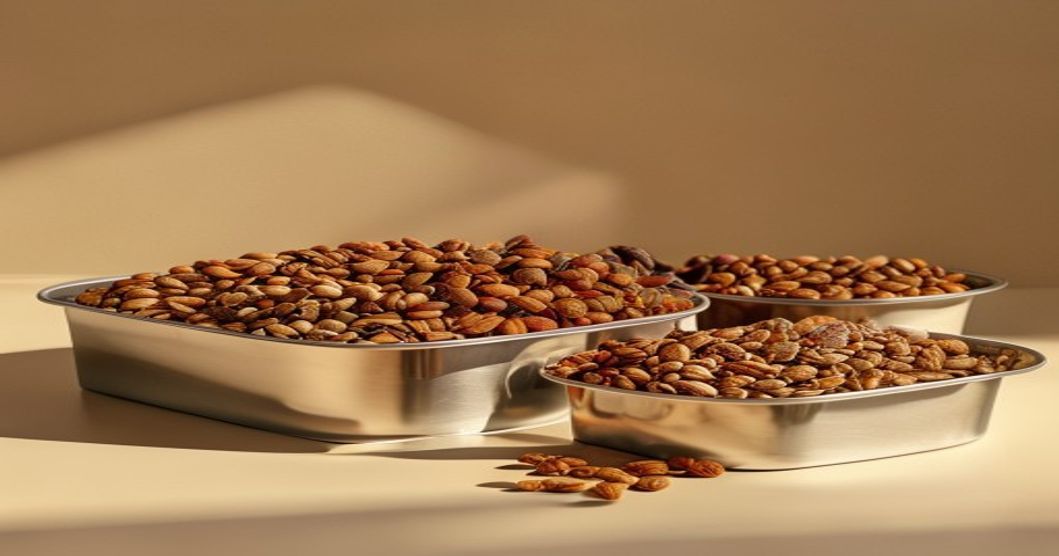
The most invisible cost line behind the bar
If a cafe chain, hotel or restaurant has hot chocolate, chai latte or salep on the menu, there is a sourcing decision behind every cup: where does the base come from, in what format, and does it taste the same every time? Most operations that spend hours calibrating dose, grind and extraction on the espresso side still run the non-espresso hot beverage category on hand-mixed, branch-by-branch recipes. Yet this category — especially in winter — carries some of the highest gross margin per cup on the entire menu.
This guide is written for cafe chain, hotel and restaurant buyers. It walks through what the 1 kg industrial beverage-base format contributes to unit economics, which base varieties fit which service scenario, how seasonal menu planning works, how private label branding extends from the cup to the retail shelf, and how the sampling and quality documentation process runs.
Why the 1 kg industrial base format?
An industrial beverage base is a standardised powder blend that a barista combines with milk or water and turns into a served drink within a minute or two. The 1 kg format delivers three concrete things to a HoReCa operation:
Portion cost control. One kilogram of base divides into 25-40 servings with a dosing scoop or scale (depending on the drink and recipe). Ingredient cost per cup becomes calculable to the cent, so menu pricing rests on data rather than estimates. In hand-built recipes, a barista's "a little extra cocoa" decision quietly erodes margin — a dosed base removes that variable entirely.
Consistent taste. The hardest problem in chain operations is cross-branch consistency. Five branches using the same base serve the same hot chocolate. The customer experience is tied to a specification, not to whoever is behind the bar that day. In a sector with high staff turnover, this also cuts training cost: what a new hire must learn is a dose, not a recipe.
Speed of preparation. During peak hours, the difference between a chai latte leaving the bar in 40-60 seconds versus three minutes is till revenue. A powder base keeps per-order preparation time short and predictable, and it does not require separate syrup bottles, a chocolate-melting kettle or spice-steeping equipment at the bar station.
Add storage economics: powder bases store at ambient temperature, need no cold chain, offer a long shelf life in unopened packaging, and carry far more servings per unit of volume than liquid syrups.
Base varieties and where each one fits
The five base categories we supply in 1 kg format cover most of a HoReCa menu's non-espresso hot and cold beverage needs:
Hot chocolate base. The flagship of the winter menu. Prepared with milk; thickness is tuned to the venue's concept through the milk ratio, from dense Italian-style to a lighter drinkable consistency. It also works in self-serve dispensers on hotel breakfast buffets.
Chai latte base. The fastest-growing non-espresso line in post-third-wave cafes. The spiced tea profile is standardised and combines with steamed milk. Unlike hand-brewed chai, the spice balance does not drift from batch to batch.
Salep base. Salep is a traditional Turkish winter beverage — milk-based, thick, served with cinnamon, and a fixture of the cold months since Ottoman times; see the encyclopaedia entry on salep for its cultural background. For venues serving Turkish diaspora communities in Europe, or local customers looking for a drink with a story, it is a strong differentiator — one of the few menu items whose history can be told at the table.
Milkshake base. The workhorse of the cold side, blended with ice cream or cold milk. Indispensable for the family and kids segment in restaurant and burger concepts.
Frappe base. The iced, whipped classic of the summer menu. Ready in seconds with a shaker or mixer; carries high volume in beach hotel and seasonal-resort operations.
Alongside these bases, venues that want to solve their tea service within the same supply relationship can source private label tea bags from us — single-chamber, string-and-tag and enveloped formats, under the venue's own brand.
Seasonal menu planning: salep in winter, frappe in summer
Beverage-base sourcing is an annual calendar exercise, not a month-by-month ordering task. A well-built HoReCa beverage calendar works roughly like this:
- October-March: Hot chocolate and salep carry the core volume. Salep peaks in the November-February window and can be priced at a premium with cinnamon and nut garnishes.
- April-May and September: Chai latte balances the transition seasons, working both hot and as iced chai.
- June-August: Frappe and milkshake take over. The same bar station, with the same dosing discipline, turns to the cold side.
The critical point for procurement: winter bases (hot chocolate, salep) should be ordered by late summer, and summer bases by late winter. Leaving enough lead time for production, labelling and logistics prevents a mid-season stockout — and a product being pulled from the menu. For multi-branch operations, a quarterly draw-down plan from a central warehouse is the most efficient model for both price stability and shelf-life management.
Private label: your brand from the cup to the shelf
The 1 kg base stays in the back of house; what the customer sees is the cup, the menu and the counter display. Private label works on two layers here:
The operational layer. Producing the base packaging under the venue's own brand and specification. In multi-branch chains this also tightens supply discipline: branches order only their own branded product, and wrong-item receipts drop.
The retail layer. A take-home version of the drink the customer just enjoyed. This is where the retail sibling of the 1 kg industrial format comes in: 250/300 g flavoured drink powders, in apple, black mulberry, kiwi, lemon, banana, orange, strawberry, cocoa, rosehip, cinnamon, mint-lemon and salep varieties. A branded 300 g salep tin at the till means incremental revenue and your brand travelling into the customer's kitchen. The full flavour range is on our natural drink powders product page.
When cup-and-menu branding and product private label are designed together, a cafe chain extracts both operational standardisation and retail revenue from a single supply relationship.
The sampling and quality documentation process
The right sequence for beverage-base sourcing:
- Sample request. State in writing which base varieties you want to evaluate, your target serving size and your milk/water preference. Samples ship from a real production batch.
- Bar test. Test the sample not in a lab but at your own bar station, with your own milk and equipment. Behaviour under the steam wand, dissolution speed and foam structure only show themselves under real conditions.
- Documentation request. Quality certificates are available on request. Ask for the product specification, ingredient declaration and allergen statement at the sample stage — not at the order stage.
- Specification lock. The approved sample's batch reference, dosing table and packaging details are recorded in writing; commercial orders are tied to that reference.
As a supplier exporting to the EU and Ukraine, we run this process with the documentation discipline that European food regulation expects.
FAQ
How many servings does 1 kg of base yield?
It varies by drink and recipe, but the typical range is 25-40 servings. Venues preferring a dense hot chocolate work near the lower band; standard recipes sit near the upper band. We recommend calculating your real serving count with your own cup size at the sample stage.
How should salep be positioned on the menu?
As a seasonal signature drink with a story. Its identity as a traditional Turkish winter beverage, the cinnamon-topped presentation and the limited seasonal window (November-February) together let salep be priced above a standard hot chocolate.
What is the minimum process for production under my own brand?
Sample and bar test first, then approval of packaging and label design, then the commercial order. When private label details — packaging format, label language, destination-market regulation — are settled at the sample stage, the first production run moves much faster.
When can I request quality documentation?
At any point — quality certificates are provided on request. The healthy pattern is to request the specification and allergen statement together with the sample, so the file is complete before the commercial order.
Plan your winter menu now
To test our hot chocolate, chai latte, salep, milkshake and frappe bases at your own bar station, request samples and a quote. To discuss base varieties, private label options and lead times, contact our export team.