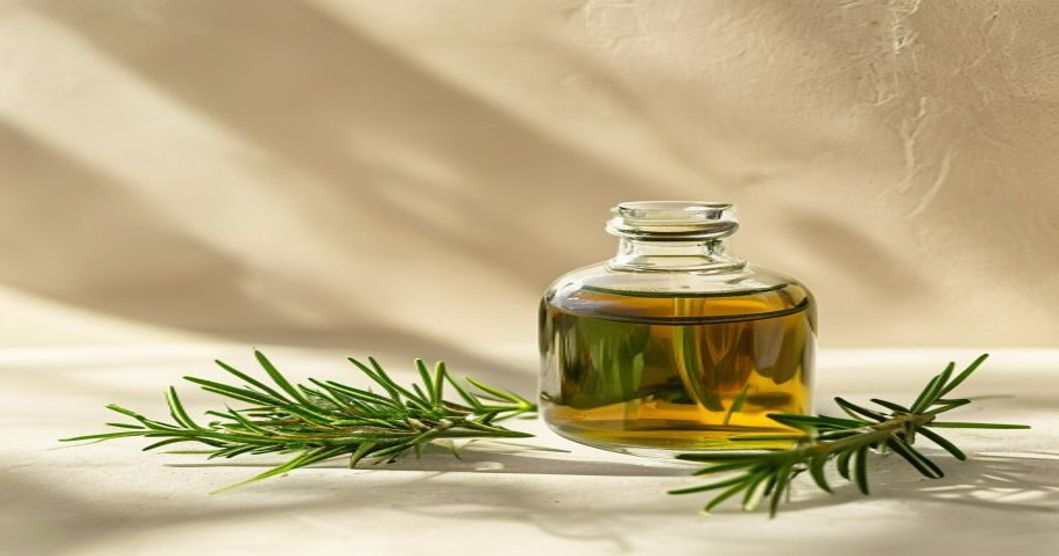
Key takeaways
- Rosemary extract is the food additive E392 — an EU-authorised antioxidant derived from Rosmarinus officinalis leaves. It is the leading natural, clean-label replacement for synthetic antioxidants BHA (E320) and BHT (E321) in fat-containing foods.
- Its activity comes from two phenolic diterpenes — carnosic acid and carnosol — which interrupt lipid oxidation and delay rancidity. Buyers specify a minimum carnosic acid percentage, because that number, not the word "rosemary," is what actually performs in the matrix.
- Rosemary extract ships in distinct functional forms — oil-soluble, water-soluble (water-dispersible), and powder/spray-dried — plus deodorised/decolourised grades that strip the herbal aroma and colour so the antioxidant works invisibly in neutral applications.
- Always demand a per-batch Certificate of Analysis (COA) stating carnosic acid content, the carrier, residual solvent, heavy metals, and microbiology — and confirm the E392 purity criteria if you are selling into the EU.
- Arovela supplies Turkish-grown rosemary processed into a natural extract line from a Sındırgı (Balıkesir) facility with a warehouse in Solingen, Germany for short EU lead times, under ISO 22000, ISO 9001, and ISO 27001 documentation with a COA available on request.
Introduction: why clean-label reformulation runs through rosemary
For most of the last fifty years, the cheapest way to stop fats from going rancid was a few hundred parts per million of a synthetic antioxidant — BHA, BHT, or a gallate. They work, they cost almost nothing, and they appear on ingredient lists as E-numbers that today's shopper increasingly reads as something to avoid. As "no artificial additives" moved from a niche claim to a mainstream retail requirement, food manufacturers needed a natural antioxidant that could actually carry the load. The answer most of the industry settled on is rosemary extract, the food antioxidant E392.
This is not a wellness story; it is a shelf-life and procurement story. Lipid oxidation is what turns a snack stale, a sausage grey, and a fish oil unsellable. A rosemary extract food antioxidant labelled E392 lets a brand strike BHA/BHT off the deck and replace it with "rosemary extract" or, in some markets, "natural flavouring" — without surrendering the oxidative stability the formula was built around. For a procurement or R&D team, the real questions are narrower than "is rosemary good": which carnosic acid specification, which carrier form, which grade of deodorisation, and what the COA must prove.
This guide is written for B2B buyers — meat processors, edible-oil refiners, snack and bakery manufacturers, and pet-food formulators — sourcing rosemary extract from Türkiye. It explains the active chemistry, the form and grade choices, the EU additive status, and the exact documentation to request. If you are weighing how the extract itself is produced, our CO2 vs ethanol extraction B2B guide covers the solvent question that sits underneath every rosemary spec.
What rosemary extract (E392) actually is
Rosemary extract is a concentrated preparation made from the dried leaves of rosemary (Rosmarinus officinalis, also classified as Salvia rosmarinus), an evergreen Mediterranean shrub. The leaf is extracted with a permitted solvent — typically ethanol, acetone, or supercritical CO2 — and the extract is then refined, standardised, and often deodorised. The commercial value lies not in the herb itself but in a small group of phenolic antioxidant compounds that rosemary happens to contain at unusually high levels.
In the EU food-additive system this ingredient carries the number E392 and the name "extracts of rosemary." That is an important distinction: E392 refers specifically to a standardised antioxidant extract defined by its active-compound content and purity, not to culinary rosemary, rosemary essential oil, or a generic botanical infusion. When a label or specification says E392, it is making a regulated additive claim.
The active compounds: carnosic acid and carnosol
The antioxidant power of rosemary extract comes overwhelmingly from two phenolic diterpenes:
- Carnosic acid — the most abundant and most potent antioxidant diterpene in fresh rosemary leaf. It is a powerful chain-breaking antioxidant that donates hydrogen to lipid radicals and halts the oxidation cascade. Carnosic acid is the headline number on almost every rosemary-extract specification.
- Carnosol — formed largely from the oxidation/degradation of carnosic acid during processing and storage. Carnosol is itself an effective antioxidant, so the carnosic acid + carnosol pair is often reported together as a measure of total diterpene activity.
Two further phenolics — rosmarinic acid (a water-soluble phenolic acid) and carnosol's relatives — contribute to antioxidant capacity, particularly in water-soluble grades. But for fat-phase protection, carnosic acid is the parameter that matters, and it is the figure a serious buyer holds the supplier to.
Mechanistically, these diterpenes act as primary (chain-breaking) antioxidants: they scavenge the free radicals that propagate lipid peroxidation, extending induction time — the lag before measurable rancidity sets in. This is why rosemary extract is dosed against an oxidation target (for example, a Rancimat or OSI induction-time improvement) rather than a flavour target.
Why rosemary extract replaces BHA and BHT
Synthetic antioxidants BHA (butylated hydroxyanisole, E320) and BHT (butylated hydroxytoluene, E321), along with TBHQ and the gallates (E310–E312), have dominated fat preservation for decades because they are cheap and effective at low dose. The shift away from them is driven by three converging pressures:
- Consumer and retailer clean-label demand — major retailers and brands have committed to removing artificial additives, and shoppers actively scan for and reject E320/E321.
- Regulatory scrutiny — synthetic antioxidants are subject to strict, sometimes tightening, maximum-use levels and ongoing safety re-evaluation, while "rosemary extract" reads as a recognisable food ingredient.
- Premium and "free-from" positioning — natural-antioxidant labelling supports the marketing claims a modern food brand is built on.
Rosemary extract is the natural antioxidant that most cleanly fills the gap because, gram for gram of active diterpene, it delivers genuinely competitive oxidative stability in fats and oils. The trade-off is honesty about dose and form: a natural extract is typically used at a higher inclusion level than a synthetic and must be matched to the matrix (oil-soluble vs water-soluble) — which is exactly why form and carnosic acid percentage are the heart of the buying decision.
| Attribute | Rosemary extract (E392) | Synthetic BHA / BHT (E320 / E321) |
|---|---|---|
| Origin | Natural — rosemary leaf | Synthetic / petrochemical-derived |
| Label perception | Clean-label, "rosemary extract" | E-number, "artificial antioxidant" |
| Active principle | Carnosic acid, carnosol (diterpenes) | Single synthetic phenolic molecule |
| Mechanism | Chain-breaking (radical scavenging) | Chain-breaking (radical scavenging) |
| Typical inclusion | Higher (ppm to low %, by grade) | Very low ppm |
| Heat stability | Good; carnosic acid degrades at high temp | High |
| Flavour/colour impact | Possible (use deodorised/decolourised grade) | Negligible |
| Marketing fit | Supports "no artificial additives" | Conflicts with clean-label claims |
Forms and grades: matching the extract to the matrix
The single most common sourcing error with rosemary extract is ordering the wrong form. The active diterpenes are fat-loving, so a raw extract naturally suits oils — but a great deal of food is water-based or dry, and that is where carrier engineering matters.
Oil-soluble rosemary extract
The native form. Carnosic acid and carnosol are dispersed in an edible oil carrier (sunflower, rapeseed, etc.) or supplied as a high-strength liquid/paste. This is the workhorse for:
- Edible oils and fats — frying oils, blended cooking oils, shortenings, margarine.
- Fat-continuous foods — many snacks, fried products, and bakery fats.
- Fish oil and omega-3 oils, which are highly prone to oxidation.
Oil-soluble grades are specified by their carnosic acid percentage in the finished liquid, because that drives both dose and cost.
Water-soluble (water-dispersible) rosemary extract
Here the antioxidant is formulated with an emulsifier or polar carrier so it disperses into water-continuous systems. This grade targets:
- Processed and emulsified meat — sausages, marinades, brines, and injected products where the antioxidant must distribute through the water phase.
- Beverages, sauces, dressings, and dairy.
Water-soluble grades also tend to carry more of the water-soluble phenolics (rosmarinic acid) alongside the diterpenes.
Powder / spray-dried rosemary extract
A dry, free-flowing powder, usually spray-dried onto a carrier (maltodextrin is common). It is built for dry-blend applications:
- Seasoning and spice blends, dry mixes, bouillon.
- Dry pet food (kibble) and dry premixes.
- Any formula where a liquid antioxidant cannot be dosed cleanly.
Deodorised and decolourised grades
Native rosemary extract is aromatic, bitter, and dark green-brown — fine in a herbed sausage, unacceptable in a neutral frying oil or a light-coloured snack. Deodorised grades have the volatile rosemary aroma stripped (so they do not impart a herbal note), and decolourised grades have the green/brown colour reduced. A fully deodorised, decolourised grade lets the antioxidant function invisibly — no flavour, no colour, just oxidative stability. Expect to pay a premium for the extra processing, and confirm on the COA that deodorisation has not collapsed the carnosic acid content.
| Form / grade | Physical form | Best-fit applications | Key spec to confirm |
|---|---|---|---|
| Oil-soluble | Liquid / paste in edible oil | Oils, fats, fried snacks, fish oil | Carnosic acid %, carrier oil |
| Water-soluble (dispersible) | Liquid / emulsion | Meat, brines, beverages, sauces | Carnosic acid %, emulsifier, rosmarinic acid |
| Powder / spray-dried | Free-flowing powder | Seasonings, dry mixes, dry pet food | Carnosic acid %, carrier (e.g. maltodextrin) |
| Deodorised / decolourised | Liquid or powder | Neutral oils, light snacks, clean taste | Carnosic acid % retained, aroma/colour reduction |
When you fix a grade on the purchase order, also fix the carnosic acid specification (for example, a stated minimum percentage of carnosic acid in the delivered material) and the carrier identity, then verify both on the batch COA. A higher carnosic-acid grade costs more per kilogram but is dosed at a lower rate, so always compare suppliers on cost per unit of carnosic acid, not headline price per kilogram.
EU additive status: E392 in plain terms
In the European Union, extracts of rosemary are an authorised food additive numbered E392, regulated as an antioxidant. Its use, conditions, and the purity (identity) criteria that a compliant E392 must meet are laid down in EU additive legislation — principally the Union list of food additives and the specifications regulation. Permitted use levels and the specific food categories in which E392 may be used are defined there, and they are expressed in terms of the active antioxidant content (carnosic acid + carnosol) rather than the bulk extract.
For a buyer, the practical implications are:
- The COA should reference the E392 purity criteria (including the relevant active-compound and solvent-residue limits) if your product is sold in the EU.
- Maximum use levels are category-specific — the permitted dose in, say, a meat product differs from that in an oil or a snack. Confirm the level for your exact food category against the current legislation before locking a recipe.
- Labelling must declare the additive correctly (commonly "antioxidant: extract of rosemary" or "rosemary extract (E392)") according to your market's rules.
You can read the consolidated EU food-additive framework on the official portal: Regulation (EC) No 1333/2008 on food additives (EUR-Lex). Because additive law is updated periodically, always verify the current consolidated text and the category-specific maximum for your application rather than relying on a summary. For the wider compliance picture when bringing a natural ingredient into the bloc, see our EU market entry regulatory guide for natural products.
Quality documentation: what to request before you buy
A credible rosemary-extract supplier provides a full document pack per batch. This is the part low-cost offers tend to skip, and it is exactly where an EU food buyer cannot afford gaps.
Certificate of Analysis (COA) — per batch, tied to the lot
Insist on a batch-specific COA matched to the lot number you are buying. For rosemary extract the parameters that matter are:
- Carnosic acid content (the headline antioxidant figure; often reported with carnosol as total diterpenes).
- Carrier / form identity (the oil, emulsifier, or maltodextrin and its proportion).
- Residual solvent — proof that the extraction solvent (ethanol, acetone, hexane, etc.) is within limits; a CO2-extracted grade should show effectively none.
- Heavy metals — lead, arsenic, cadmium, mercury.
- Microbiology — total plate count, yeast and mould, and pathogen absence (Salmonella, E. coli) where relevant.
- Pesticide residues, where your specification or destination requires them.
- Physical/organoleptic — appearance, colour, odour (especially relevant for deodorised/decolourised grades).
For the broader method behind these numbers — how a COA is generated and what each test proves — see our guide to quality testing of botanical ingredients and reading a COA.
Regulatory and trade documents
| Document | What it confirms | Who asks for it |
|---|---|---|
| Batch COA | Carnosic acid %, purity, microbiology | All food buyers |
| Specification / TDS | Agreed grade, form, carnosic acid spec, tolerances | Procurement, R&D |
| Safety Data Sheet (SDS) | Hazard, handling, storage | All importers |
| E392 compliance statement | Conformity with EU additive purity criteria | EU food manufacturers |
| Allergen & GMO statement | Allergen and GMO status of extract and carrier | Labelling, retail buyers |
| Country of origin / phytosanitary | Origin (Türkiye), plant health | Customs / importers |
| Kosher / Halal (if required) | Scheme conformity | Buyers whose brand requires it |
A note on certification claims
Buyers frequently ask suppliers about organic, halal, kosher, BRC, FSSC, or GMP status because their own brand or retailer demands it. Be precise about what a supplier actually holds. Arovela's certifications are ISO 22000, ISO 9001, and ISO 27001. We provide a COA on request and the trade documentation above; we do not claim organic, halal, kosher, BRC, FSSC, or GMP certification. If your specification requires one of those scheme certificates, raise it during qualification so the correct sourcing route can be confirmed rather than assumed.
Application notes by sector
Meat and poultry
Oxidation in meat shows up as rancid off-flavours (warmed-over flavour) and colour loss. Because cured and emulsified meats carry water and salt, a water-soluble rosemary grade usually distributes best through brines, marinades, and emulsions; for higher-fat products an oil-soluble grade may suit. Rosemary extract is one of the most common natural replacements for BHA/BHT in this category. Confirm the EU maximum use level for your specific meat category.
Edible oils, fats, and fried foods
Frying oils, blended oils, shortenings, and the fat phase of fried snacks are classic oil-soluble applications. Here a deodorised, decolourised grade is usually essential so the antioxidant adds stability without a herbal taste or green tint. Dose against an induction-time (Rancimat/OSI) target for your oil rather than a fixed ppm guess.
Snacks, bakery, and seasonings
Fried and baked snacks oxidise through their fat content; dry seasoning and spice blends need a powder/spray-dried grade that mixes cleanly into a dry matrix. In both cases, rosemary extract supports a "no artificial preservatives/antioxidants" claim on pack.
Pet food
Rosemary extract is widely used as a natural antioxidant in pet food, particularly to protect the fats and added oils in dry kibble, where a spray-dried powder grade is convenient, and in treats. It is one of the standard natural alternatives to synthetic antioxidants in this fast-growing, premium-positioned category.
Competitive context and where Arovela fits
The natural-antioxidant market is served by large specialist ingredient houses — for example, Kemin, which markets well-known rosemary-based antioxidant systems, and bulk ingredient distributors such as Nutri Avenue. These suppliers set the technical reference points buyers benchmark against: standardised carnosic acid grades, application-specific forms, and full documentation.
Arovela's position is upstream and origin-led. We grow rosemary in Türkiye and process it into a natural extract line, supplying the raw rosemary extract and standardised grades for food and pet-food manufacturers who want a documented, origin-traceable source. Our edge is not a longer certificate list than the multinationals — it is Turkish-grown raw material, a transparent ISO 22000 specification, a COA on request, and an EU-side warehouse that shortens lead times for European buyers. For buyers qualifying a second or alternative source of rosemary extract, that combination of origin traceability and clean documentation is the value.
MOQ, pricing, and formats — what to expect
Pricing for rosemary extract swings with crop year, the carnosic acid grade, the form, and order volume, so treat any figure as indicative and confirm a current quote against your specification. As a directional guide:
| Grade / form | Typical format | MOQ posture | Main price driver |
|---|---|---|---|
| Oil-soluble (standard) | Drum / jerrycan, bulk | Sample-friendly, scaling to drums | Carnosic acid %, carrier oil |
| Water-soluble (dispersible) | Drum / pail | Sample-friendly | Carnosic acid %, emulsifier system |
| Powder / spray-dried | Lined sacks / cartons | Sample-friendly | Carnosic acid %, carrier load |
| Deodorised / decolourised | Liquid or powder | By agreement | Extra processing, retained carnosic acid |
| Custom spec / private grade | Agreed packaging | By agreement | Spec complexity, COA scope |
Because the same nominal product can carry very different carnosic acid contents, always compare offers on cost per unit of carnosic acid delivered, not bulk price. For first orders, request a sample with the COA attached (samples are free of charge; you cover the courier) so your lab can verify carnosic acid content and run an oxidative-stability trial in your actual matrix before committing to a drum. Confirm packaging (food-grade, light- and oxygen-protective), Incoterms, and whether stock can ship from the Solingen warehouse for faster EU delivery. Current grades, forms, and quote requests are handled through our wholesale page.
Frequently asked questions
What is E392?
E392 is the EU food-additive number for "extracts of rosemary," an antioxidant derived from the leaves of rosemary (Rosmarinus officinalis). It is a standardised extract whose activity comes from phenolic diterpenes — chiefly carnosic acid and carnosol — and it is used to delay the oxidation (rancidity) of fats and oils in food. Crucially, E392 refers to the regulated antioxidant extract defined by its active-compound content and purity, not to culinary rosemary or rosemary essential oil.
Can rosemary extract replace BHA and BHT?
Yes — rosemary extract (E392) is the leading natural, clean-label replacement for synthetic antioxidants BHA (E320) and BHT (E321) in fat-containing foods. It works by the same chain-breaking mechanism, scavenging the radicals that drive lipid oxidation. The practical differences are that a natural extract is usually dosed at a higher inclusion level than a synthetic, and you must match the form (oil- vs water-soluble) to your matrix and, for neutral products, use a deodorised grade. Validate the swap with an oxidative-stability trial in your own formula.
What is carnosic acid and why does the percentage matter?
Carnosic acid is the main antioxidant diterpene in rosemary and the single most important number on a rosemary-extract specification. It is what actually delays rancidity, so two extracts both labelled "rosemary extract" can perform very differently if their carnosic acid contents differ. Because higher-carnosic-acid grades are dosed at lower rates, buyers should specify a minimum carnosic acid percentage and compare suppliers on cost per unit of carnosic acid, not headline price per kilogram.
Which form of rosemary extract should I use — oil-soluble, water-soluble, or powder?
Match the form to your matrix. Use oil-soluble grades for oils, fats, fried snacks, and fish oil; water-soluble (dispersible) grades for processed meat, brines, beverages, and sauces; and powder/spray-dried grades for dry blends such as seasonings and dry pet food. For neutral applications where you do not want a herbal taste or green colour, choose a deodorised and decolourised grade. Confirm the carrier and the retained carnosic acid content on the COA.
What should the COA for rosemary extract include?
A per-batch COA tied to your lot should state carnosic acid content (often with carnosol as total diterpenes), the carrier/form identity, residual solvent, heavy metals, and microbiology (total plate count, yeast/mould, pathogen absence), plus pesticide residues where required and organoleptic data for deodorised grades. If you sell into the EU, ask for an E392 compliance statement confirming the additive meets the relevant purity criteria. See our COA reading guide for how to interpret each parameter.
Is rosemary extract approved as a food additive in the EU?
Yes. Extracts of rosemary are authorised in the EU as the antioxidant additive E392, with use conditions, category-specific maximum levels, and purity criteria set out in EU food-additive legislation. Permitted doses are expressed in terms of active antioxidant content (carnosic acid plus carnosol) and vary by food category, so confirm the current maximum for your specific application against the consolidated regulation before finalising a recipe.
Where can I buy rosemary extract in bulk?
Rosemary grows well in the Mediterranean climate, and sourcing from a documented B2B supplier gives you traceability and a clean COA. Arovela supplies rosemary extract from Turkish-grown rosemary, in oil-soluble, water-soluble, powder, and deodorised grades, with a COA on request, from a Sındırgı (Balıkesir) facility and stock held in a Solingen, Germany warehouse for short EU lead times. You can request grades, samples, and a quote through our wholesale page or by contacting our team directly.
Source rosemary extract with a spec you can defend
Swapping BHA/BHT for a rosemary extract food antioxidant labelled E392 is only as good as the carnosic acid number behind it and the COA that proves it. The right grade, the right form, and documentation an EU food buyer can put in front of an auditor are the difference between a clean reformulation and a stalled launch.
Arovela supplies rosemary extract from Turkish-grown rosemary, processed into a standardised natural extract line, from a Sındırgı (Balıkesir) facility with a Solingen, Germany warehouse for short EU lead times — backed by ISO 22000, ISO 9001, and ISO 27001 documentation and a COA on request. Tell us your application, your target carnosic acid spec, and your destination market, and we will match the right grade and the paperwork to go with it. Contact the Arovela team to request a sample and a quote.