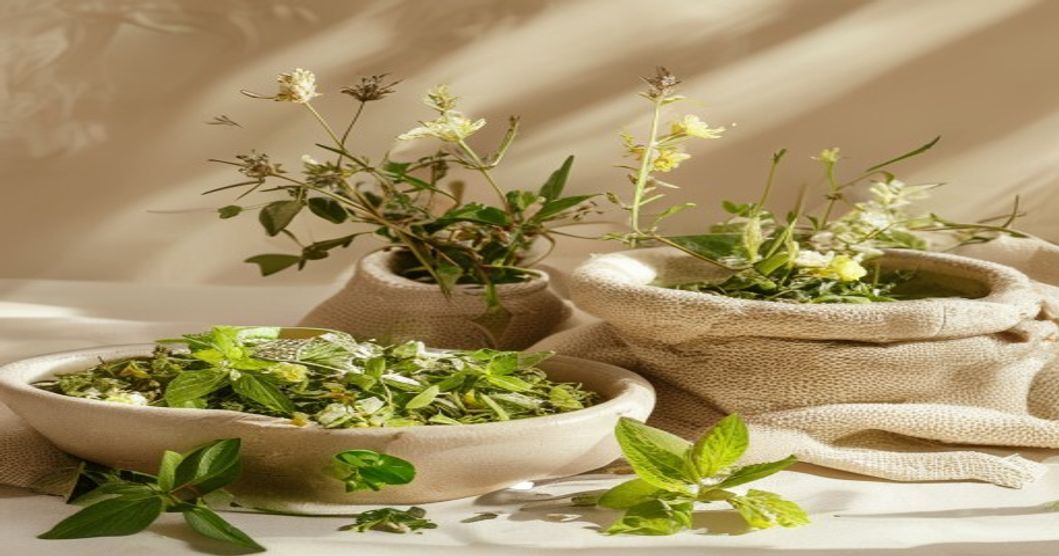
Why a tea portfolio is not a random product list
Most buyers starting a private label tea project begin with a list: "We want chamomile, mint, green tea, and a couple of fruit varieties." That list is not a portfolio. A portfolio is a structured set with shelf logic, segment balance, supply continuity, and taste consistency. The difference determines whether the first order lands on the shelf as a coherent range — or as eight boxes that do not belong together.
This guide uses our own structure as a template: 45 named blends and 32 offerable varieties, organised into three segments, plus the benchmark matching process that matches taste, aroma, and liquor colour against a reference sample the buyer already has. The goal is to let a private label buyer make variety selection systematically instead of intuitively.
Three segments: classic, herbal, fruit
Every working tea portfolio splits into three segments, and each segment has a distinct job on the shelf.
Classic / black segment (5 varieties). The volume backbone: Rize black tea, bud/tips tea, Earl Grey, green tea, and white tea. This segment gives the buyer's brand its "tea brand" identity — the products consumers drink daily. Premium items like bud/tips tea add a top end to the range.
Herbal segment (23 varieties). The breadth and margin layer: chamomile, linden, mint, mint-lemon, sage, lemon balm, fennel, thyme, rosemary, rosehip, hibiscus, ginger, ginger-lemon, cinnamon, clove, anise, echinacea, lavender, dried rose, nettle, St John's wort, laurel, and winter tea. No one launches with all twenty-three; the segment is a menu from which a buyer curates 6-10 varieties for their market.
Fruit segment (4 varieties). The shelf-appeal and family-consumption layer: apple, orange-cinnamon, red berries, and rosehip-hibiscus. Caffeine-free, colourful in the cup, and repeat-purchased in households with children.
A practical rule: a balanced launch set usually contains 2-3 classic + 5-7 herbal + 2-3 fruit varieties. Leave one segment completely empty and the shelf story is incomplete.
What sells where: general industry observations
The following are recurring industry-wide observations, not claims about specific customers; our own export markets are the EU and Ukraine:
- Linden and chamomile are strong in Europe. In Central and Eastern Europe, linden is part of the winter tradition; chamomile is the default of the "calming evening tea" shelf in almost every market.
- Mint and mint-lemon are the safe first choice across a wide geography; the refreshing positioning works independently of culture.
- Hibiscus and rosehip-hibiscus take a share of the cold-brew trend thanks to their tart-fruity profile and vivid liquor colour.
- Mediterranean botanicals like sage, thyme, and laurel sell to a niche but loyal audience; the "Anatolian botanical" story creates differentiation here.
- Ginger, ginger-lemon, and echinacea carry strong winter/immunity seasonality; annual planning should weight them toward Q4.
- Fruit blends are the fastest-turning caffeine-free segment on supermarket private label shelves.
Treat these observations as a starting hypothesis for a selection; the final call belongs to the buyer's own shelf data.
45 blends and the logic of named series
On top of single-ingredient varieties sits the blend layer. Our portfolio holds 45 named blends, and the naming is not decorative: each blend carries a series name that evokes its profile and drinking occasion — Sunset Glow, Wild Sage, Golden Hour, Morning Dew, Istanbul Breeze, Linden Calm.
The named-series logic gives a private label buyer three advantages:
- A ready-made concept. Saying "an evening blend in the Linden Calm style" instead of "a chamomile-lemon balm-lavender mix" sets up the packaging and marketing language from the start. The buyer can adapt the series to their own brand voice.
- A repeatable recipe. Every named blend has a fixed recipe, ingredient ratios, and a documented sensory profile. The second and the fifth production lot deliver the same profile as the first.
- Fast portfolio extension. Launch with 8 varieties; once the series logic is established, adding new blends from the same name family does not break shelf coherence.
Benchmark matching: matching against a reference sample
Most private label projects do not start from a blank recipe — they start from a reference: an existing product that already sells well in the buyer's market. Benchmark matching is the systematic process of matching that reference's taste, aroma, and liquor colour. Step by step:
- Reference intake. The buyer ships 2-3 boxes of the product to match, in original packaging. Lot number, best-before date, and purchase date are logged; multiple boxes are needed to see lot-to-lot variation.
- Sensory deconstruction. The reference is brewed under controlled conditions: same water, same temperature, same time. Dry-leaf appearance, dry aroma, wet aroma, liquor colour, and taste profile are scored separately.
- Ingredient mapping. The declared ingredient list is compared against the sensory profile; dominant and supporting ingredients are mapped with estimated ratio ranges.
- Trial blends. Usually 2-4 candidate recipes are prepared: one aimed as close to the reference as possible, the others as deliberate variations (a stronger herbal note, a lighter liquor colour).
- Side-by-side cupping. Candidates are brewed next to the reference under blind codes. Colour comparison is done in white porcelain cups under identical light; aroma and taste notes are scored.
- Sample shipment and buyer approval. The best 1-2 candidates are shipped to the buyer in final bagged form. The buyer's team runs the same comparison and returns written feedback.
- Iteration and specification lock. The recipe is adjusted to the feedback; the approved recipe is locked into a written specification with ingredient ratios and sensory reference values. That specification becomes the contractual reference for the first commercial run.
A typical sample cycle runs 3-6 weeks from reference intake to approved recipe; each additional iteration round adds 1-2 weeks. The single most effective way to shorten the cycle is concrete feedback — "liquor one shade darker, mint note further back" instead of "make it better."
Production and documentation reality
A portfolio is designed on paper but delivered in a teabag. At our Sındırgı facility, a single-chamber string-and-tag teabag line runs at roughly 1,000 bags per hour; filling, string-and-tag attachment, and enveloping are completed on one line. See our private label tea bag production page for formats and specifications.
On the quality side, production runs under an ISO 22000 food safety management system, complemented by ISO 9001 and ISO 27001 certifications. On the logistics side, the Sındırgı facility and our Solingen (Germany) warehouse give two dispatch points into the EU and Ukraine markets.
FAQ
How many varieties should I launch with?
For most private label projects, 8-12 varieties is the sweet spot: 2-3 classic, 5-7 herbal, 2-3 fruit. Smaller sets leave the shelf story incomplete; larger sets make per-variety minimum order quantities hard to reach on the first order.
Does benchmark matching guarantee a one-to-one match?
No, and no honest manufacturer promises it. Botanical raw material varies by harvest year and origin. The target is a profile close enough to be indistinguishable — or preferred — in blind cupping, plus a written specification that keeps it consistent lot to lot.
Should I start from my own recipe or from an existing blend series?
Under time pressure, curating from existing named blends is fastest — the recipes are proven and repeatable. If a strong reference product exists in your market, benchmark matching gives the more accurate result. Both approaches combine in one portfolio.
What should I have ready during the sample cycle?
Target market and shelf segment, the reference product (if any) with multiple boxes, target bag count and box format, label language requirements, and estimated annual volume. With these five ready, the first sample set usually lands close to target in a single round.
Ready to build your portfolio?
Request a tailored quote with your segment selection, blend series, or the reference product you want matched, or contact our export team to discuss the variety list, the sample process, and lead times.