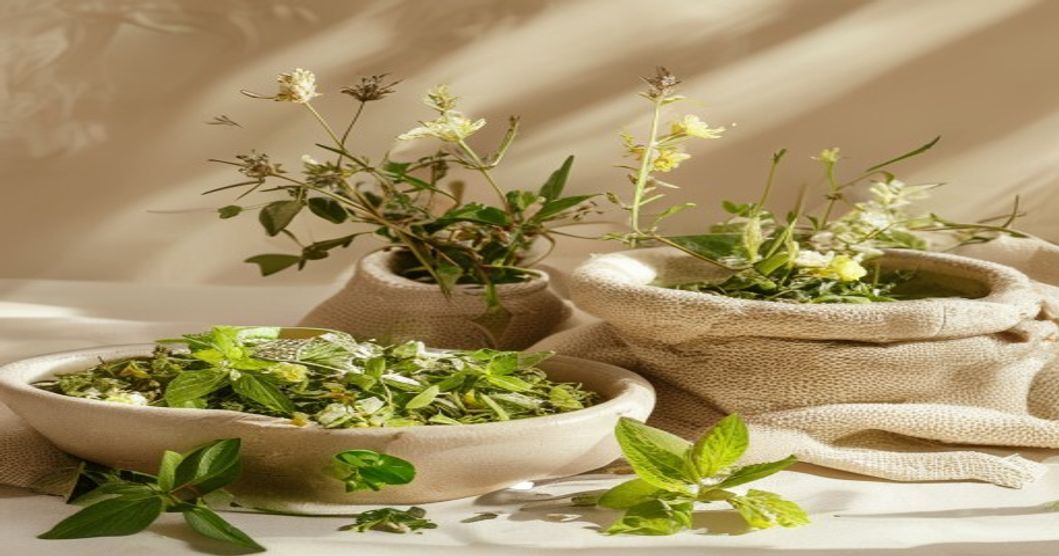
Key takeaways
- The Mediterranean culinary trio is bought together but specified separately. Rosemary, sage and thyme travel through the same blends — poultry seasoning, herbes de Provence, pizza and grill mixes — yet each has its own species question, its own marker compounds and its own failure modes, so one shared RFQ line will not protect all three.
- "Thyme" from Turkey is the biggest naming trap. In the Turkish trade the word kekik collectively covers thymol- and carvacrol-rich plants across the genera Thymus, Thymbra, Origanum and Satureja; a large share of what ships as "thyme" is actually Origanum onites (İzmir oregano). Specify the Latin binomial, or you may buy oregano when the recipe wanted true thyme.
- Each herb has a marker chemistry the COA should carry. Rosemary is defined by carnosic acid, carnosol and rosmarinic acid (the same diterpenes behind the E392 antioxidant extract); thyme by thymol and carvacrol; sage by thujone and 1,8-cineole. These are the numbers that separate a genuine lot from a look-alike.
- Grade, colour and aroma sit on top of species. Rubbed, cut, tea-cut and ground are different lots with different bulk density, dust and oil-loss profiles — and a green, fragrant leaf is worth more than a dull, hay-like one at the same cut.
- Arovela is judged on documented Turkish supply within ISO 22000, ISO 9001 and ISO 27001 — not on organic, GMP or invented customer claims. Species identity, marker chemistry, moisture, microbiology and contaminant screening are what the COA has to prove, lot by lot, for EU and Ukraine shipment.
Introduction
Rosemary, sage and thyme are the workhorse herbs of Mediterranean cooking, and most B2B buyers meet them together — as the backbone of a poultry rub, a herbes-de-Provence blend, a grill seasoning or a slow-cooked-meat mix. It is tempting to treat the trio as a single commodity line and issue one RFQ for "dried Mediterranean herbs." That is exactly where sourcing goes wrong. The three plants share an aromatic, oil-rich character and a Mediterranean origin, but they belong to different botanical groups, carry different marker compounds, fail in different ways, and — critically for Turkey — hide different naming traps.
This guide is written for procurement, QA and regulatory teams importing Turkish rosemary, sage and thyme into the EU and Ukraine. It covers the species behind each name (including the thyme-versus-oregano muddle that surrounds the Turkish word kekik), the marker chemistry that defines each herb, the dried-leaf grades and their colour and aroma expectations, moisture and microbiology, decontamination, pesticide and thujone considerations, why buyers buy the trio together, realistic MOQ and packaging, and the exact language your RFQ and COA should carry. Because sage has a regulatory dimension of its own, it is treated in depth in the dedicated sage leaf bulk sourcing guide; for shared contaminant and hygiene controls, read the microbial limits for botanicals buyer guide and the heavy metals in botanicals and dried fruit guide.
Three herbs, three species questions
The first control on any of these herbs is botanical identity. All three names cover more than one plant, and only one of the three names is genuinely stable.
Rosemary — Rosmarinus officinalis L. This is the least ambiguous of the trio: culinary and extract rosemary is a single species, an evergreen Mediterranean shrub. The one thing buyers should know is a nomenclature update: taxonomists have reclassified rosemary into the genus Salvia, so Rosmarinus officinalis now carries the accepted synonym Salvia rosmarinus (Spenn.). Both names refer to the same plant; seeing Salvia rosmarinus on a spec sheet is not an error and does not mean you have been sent sage.
Sage — Salvia officinalis L. versus Salvia fruticosa Mill. (syn. S. triloba). Here the species question is sharp and commercially loaded. Dalmatian/common sage (S. officinalis) is thujone-rich; Anatolian/Turkish sage (S. fruticosa) is native across Anatolia, typically low in thujone and dominated by 1,8-cineole. They are not interchangeable, and the difference has a food-safety dimension. This is covered fully in the sage leaf sourcing guide; the short rule is: name the binomial in the sage RFQ.
Thyme — Thymus vulgaris L. and the Turkish kekik complex. This is the trickiest name in the trio, and it deserves its own section.
The thyme / oregano ("kekik") naming muddle
In Turkey, the vernacular word kekik does not map cleanly onto the English word "thyme." Kekik is a collective name applied to a whole group of aromatic Lamiaceae whose essential oils are rich in the phenolic monoterpenes thymol or carvacrol — spanning the genera Thymus, Thymbra, Origanum and Satureja. In practice, a great deal of the material that leaves Turkey labelled "thyme" is botanically oregano. Turkey supplies well over half of the world's oregano trade, and by most accounts the dominant exported kekik is Origanum onites (İzmir oregano/İzmir kekiği), alongside Origanum vulgare subsp. hirtum, Origanum minutiflorum, Thymbra spicata and others.
The botanical convention that resolves the confusion is chemical: a herb whose oil is dominated by thymol is treated as "thyme," while one dominated by carvacrol (thymol's isomer) is treated as "oregano." True Thymus vulgaris of the thymol chemotype is thymol-led; Turkish Origanum onites oil is typically carvacrol-led (carvacrol commonly reported around 70% of the oil). But the split is not tidy — some Thymbra and Satureja populations swing between carvacrol- and thymol-rich oils even in neighbouring wild stands, which is why a leaf photo cannot settle identity.
For a buyer, three practical rules follow. First, decide whether you actually want Thymus (true thyme) or Origanum (oregano) and write the Latin binomial — "thyme" or "kekik" alone is not a specification. Second, if the application is aroma- or claim-sensitive, ask for a GC or GC-MS profile of the distilled oil so you can see whether thymol or carvacrol dominates. Third, keep this trade reality in your contract: material honestly sold in Turkey as kekik may be oregano, so agreeing the species up front prevents an "it's not thyme" dispute on arrival. Arovela's dedicated oregano guides — Turkish oregano essential oil B2B guide and oregano/thyme oil as a carvacrol feed additive — cover the Origanum side in depth.
Marker chemistry: what defines each herb
Once species is fixed, each herb has a small set of marker compounds that define its quality and that a serious COA can report. The figures below are typical published ranges, not guarantees — composition varies widely with species, chemotype, harvest timing, drying and region, so treat them as orientation for setting a specification, not as fixed values.
| Herb | Principal species (Turkey) | Marker compounds | Typical marker orientation | Why the buyer cares |
|---|---|---|---|---|
| Rosemary | Rosmarinus officinalis (syn. Salvia rosmarinus) | Carnosic acid, carnosol, rosmarinic acid | Carnosic acid typically low single-digit % of leaf; rosmarinic acid a few % (both vary widely) | Diterpene antioxidants; the basis of the E392 antioxidant extract |
| Thyme (true) | Thymus vulgaris (thymol chemotype) | Thymol (lead), carvacrol, p-cymene, γ-terpinene | Thymol-dominant oil; Ph. Eur. oil 37–55% thymol, 0.5–5.5% carvacrol | Antimicrobial/aromatic phenols; thymol is the "thyme" signature |
| "Thyme"/kekik as oregano | Origanum onites, O. vulgare ssp. hirtum, Thymbra spicata | Carvacrol (lead), thymol, p-cymene | Carvacrol-dominant oil (often ~60–75%) | Confirms the lot is oregano, not true thyme |
| Sage | Salvia officinalis / S. fruticosa | α-/β-Thujone, 1,8-cineole, camphor | S. officinalis thujone-rich; S. fruticosa cineole-rich, low thujone | Species + thujone drive EU food-composition context |
Rosemary: carnosic acid, carnosol and rosmarinic acid
Rosemary's value as more than a culinary leaf comes from a group of phenolic antioxidants. The two headline diterpenes are carnosic acid — the most abundant and most potent antioxidant diterpene in the leaf, a chain-breaking radical scavenger — and carnosol, largely formed as carnosic acid oxidises during processing and storage, and itself an effective antioxidant. Alongside them sits rosmarinic acid, a water-soluble phenolic acid that contributes antioxidant capacity, especially in water-phase systems. Published HPLC work on rosemary extract commonly reports figures on the order of a few per cent carnosic acid and a few per cent rosmarinic acid, but leaf and extract values vary widely with genetics and processing, so a buyer who cares about antioxidant performance specifies a minimum carnosic acid figure rather than the word "rosemary."
This chemistry is exactly why rosemary underpins the EU food additive E392, "extracts of rosemary" — an authorised natural antioxidant used to replace synthetic BHA (E320) and BHT (E321) in fat-containing foods, whose permitted levels are expressed as carnosic acid plus carnosol, not as whole extract. A dried culinary rosemary leaf is not E392, but it is the raw material behind it; the connection is explained in the rosemary extract (E392) natural food antioxidant guide. For the underlying safety assessment of the additive, see the EFSA opinion: EFSA refined exposure assessment of extracts of rosemary (E 392).
Thyme: thymol and carvacrol
Thyme is defined by two isomeric phenolic monoterpenes: thymol (2-isopropyl-5-methylphenol) and carvacrol (2-methyl-5-(propan-2-yl)phenol). Thymol carries the characteristic warm, medicinal "thyme" note and is the antimicrobial workhorse; carvacrol is its isomer and the signature of oregano. The European Pharmacopoeia gives a concrete benchmark for the distilled oil: thyme oil (from Thymus vulgaris / T. zygis) is specified at 37–55% thymol and 0.5–5.5% carvacrol. For the herb itself, the pharmacopoeia describes whole leaves and flowers separated from the dried stems with a minimum essential-oil content around 12 mL/kg and a minimum thymol-plus-carvacrol content near 40% of the oil. Those numbers only describe Thymus vulgaris of the thymol type; a carvacrol-dominant Turkish oregano lot will not — and should not be expected to — match a thymol spec. For how to read the chromatogram behind these figures, see reading a GC-MS report for essential oils.
Sage: thujone and 1,8-cineole (cross-reference)
Sage completes the trio, and its marker story is the most regulation-adjacent of the three: Salvia officinalis oil is typically thujone-rich, while Anatolian Salvia fruticosa is typically low in thujone and dominated by 1,8-cineole. Because thujone intake is capped in finished foods under EU flavouring rules, the sage species you buy directly affects your recipe headroom. This is developed fully — with the EU thujone limits table and the Ph. Eur. sage oil-content floor — in the sage leaf bulk sourcing guide, and it is the main reason sage cannot simply ride on a shared "Mediterranean herbs" specification.
Dried-leaf grades, colour and aroma
Once species and markers are fixed, physical form is the next commercial decision, and it is identical in logic across all three herbs: the same botanical is traded in several cuts, and they are different lots with different economics and risks.
| Grade | Description | Best-fit use | Main risk to control |
|---|---|---|---|
| Whole / hand-select leaf | Intact dried leaves, best visual grade | Premium loose blends, visible botanicals, some distillation | Bulky, fragile, low pack density; breakage in transit |
| Rubbed | Leaf rubbed to a soft, fluffy, low-density flake (common for sage and thyme) | Culinary seasoning, dry blends | Very low bulk density; dust; static; fill-weight control |
| Cut / tea-cut (TBC) | Leaf cut to a defined sieve range; fine "tea-bag cut" for infusions | Blends, filling, tea-bag lines | Sieve consistency; stem/leaf ratio; dust percentage |
| Ground / powder | Milled leaf | Seasoning bases, encapsulation, some extract prep | Highest surface area → oxidation, aroma loss, microbial exposure |
Two colour-and-aroma rules apply to the whole trio. First, green colour and a strong, clean aroma are graded quality signals, not cosmetics. A vivid grey-green sage, a bright green rubbed thyme and a green-needled rosemary indicate careful drying at controlled temperature; a dull, brown, hay-like leaf signals heat abuse, slow drying or age, and a flat aroma usually means the volatile oil is already gone. Buyers should approve against a retained reference sample for both colour and smell, not against a written adjective. Second, do not pay whole-leaf prices for cut, rubbed or ground material unless the assay and application justify it — and freeze the cut against a sieve specification and a leaf-to-stem ratio, because stems dilute the oil and fines cause dust and dosing problems on a blending or tea line. "Cut thyme" or "rubbed sage" with no sieve range is a range of possibilities, not a specification.
Moisture, microbiology and steam treatment
All three herbs are aromatic, porous and hygroscopic, so the storage-stability logic is shared. Commercial dried leaf is commonly targeted below roughly 10–12% moisture, but the number should be tied to water activity and packaging rather than quoted alone — a lot can test dry at dispatch and still gain moisture under a weak liner in a humid warehouse, flattening aroma and raising mould risk before the carton is opened.
Microbiology depends on intended use, and untreated dried leaf naturally carries a high bioburden — normal agricultural microbiology, not automatic evidence of a careless supplier. Buyers should specify total aerobic count (TAMC), yeast and mould (TYMC), E. coli and Salmonella against the framework their market demands, and state the sample mass (Salmonella is meaningless without "absence in 25 g"). Whether the correct framework is a boil-water herbal-tea category or a stricter food-use limit changes the acceptable numbers entirely; the botanical microbial limits buyer guide sets those side by side.
Decontamination is a genuine trade-off for aromatic leaf. Steam treatment is the common EU-accepted route: it leaves no chemical residue and needs no consumer label declaration, but it adds heat and moisture that can dull the very volatile oil — thymol, carvacrol, cineole, the rosemary aromatics — that defines these herbs. For an aroma-critical lot, compare treated and untreated samples in the final application before committing. And in every case, exclude ethylene-oxide-fumigated material, which is not permitted as a food fumigant in the EU. The RFQ must state whether steam treatment is required or prohibited.
Pesticides, thujone and other contaminant controls
Rosemary, sage and thyme for EU food use share the standard botanical contaminant programme, with one herb-specific addition.
- Pesticide residues. All three must be screened against the buyer's residue programme under the EU MRL framework (Regulation (EC) No 396/2005). New origins, new growers and new crop years justify a fuller multi-residue screen; a stable supplier history can support risk-based frequency later, but the screen should never quietly disappear. The mechanics carry over from pesticide-residue management.
- Heavy metals. Leaf material has a large surface area and can pick up lead and cadmium from soil, dust and roadside deposition. Screen Pb, Cd, As and Hg by ICP-MS on a risk basis, especially on new origins and annual crop changes, and compare against the finished product's serving size rather than the raw leaf alone. Contaminant limits for many botanicals sit under Regulation (EU) 2023/915; see the heavy metals in botanicals guide.
- Thujone (sage only). This is the trio's one herb-specific control. Because sage carries thujone and the EU caps thujone in the finished food or beverage as consumed, the sage species and its thujone level determine your recipe headroom. There is no legal thujone limit on the leaf itself, but a high-thujone S. officinalis forces tighter dosing than a low-thujone S. fruticosa. Rosemary and thyme do not carry this constraint. The full limits table is in the sage leaf sourcing guide, and the safety background is the EMA public statement on thujone: EMA public statement on thujone.
Why buyers buy the trio together
There is a real commercial reason rosemary, sage and thyme move through purchasing as a set: they are the recurring components of the West's best-known savoury blends. Poultry seasoning leans on sage and thyme with rosemary support; herbes de Provence combines thyme, rosemary and savory (often with oregano and marjoram); Italian and pizza seasonings pair oregano/thyme with rosemary; grill, roast-meat and stuffing mixes use all three. A blend house or a private-label food manufacturer that formulates these products wants a single supplier relationship, aligned crop years and consistent cuts across the three, so that a poultry rub tastes the same batch after batch.
Buying the trio together is efficient — shared logistics, shared documentation discipline, one lead-time conversation — but it must not collapse into a single specification. Each herb keeps its own species line, its own marker expectations and, for sage, its own thujone consideration. The practical model is one commercial relationship, three technical specifications. That is also how a blend's consistency is protected: if the thyme is quietly swapped for a carvacrol-rich oregano, or the sage species changes, the finished seasoning shifts even though the label still reads "rosemary, sage, thyme." For putting a blend together from components, see the custom trail-mix and blend sourcing guide for the same component-control logic applied to another product family.
MOQ, packaging and lead time
Physical form drives packaging and MOQ across all three herbs. Whole leaf is bulky and fragile, so a carton holds relatively little weight and compression damages the leaf; rubbed and tea-cut pack denser but create dust; ground/powder is the most exposure-sensitive of all. Packaging should use food-grade inner liners inside cartons, sacks or drums, protecting the lot from moisture, light, pests and — critically for aromatic herbs — odour cross-contamination, because these leaves both lose and pick up volatiles readily. Never store rosemary, sage or thyme beside strong spices, essential oils or cleaning chemicals, and keep the three from cross-scenting each other in shared storage.
Realistic planning bands, not stock promises: pilot and sample-to-trial quantities often start around 25–100 kg per herb; commercial export lots commonly move from 250 kg upward; custom cuts, tea-bag grades or dedicated milled lots may need 500–1,000 kg to justify a production run. Ordering the trio together can consolidate a shipment, but each herb is still a separate lot with its own COA. Lead time depends on crop availability, whether the lot is steam-treated, and the depth of the testing panel — build testing turnaround into the schedule rather than discovering it at dispatch. For broader logistics, see Incoterms for natural products.
RFQ and COA language
A defensible COA states, per lot and per herb: botanical species (Latin binomial), plant part, physical form/cut, crop year, lot number, moisture (and water activity where relevant), microbiology with methods and sample masses, pesticide screen, heavy metals where requested, and — where the programme needs it — a GC/GC-MS marker profile (carnosic/rosmarinic acid for rosemary; thymol/carvacrol for thyme; thujone/cineole for sage). Reject any document that cannot be tied to the carton label, invoice and packing list.
Example RFQ wording buyers can adapt for the trio:
"Supply shall comprise, as separate lots with separate COAs: (1) rosemary, Rosmarinus officinalis L. (syn. Salvia rosmarinus); (2) thyme — species stated as Thymus vulgaris L. (true thyme) OR the Origanum/Thymbra species actually supplied where sold as kekik, confirmed against retained sample; (3) sage, Salvia officinalis L. or Salvia fruticosa Mill. (syn. S. triloba), species confirmed. For each lot: crop year; physical form/cut agreed by retained sample and sieve range; colour and aroma matched to retained reference; moisture (and aw on request); TAMC, TYMC, E. coli and Salmonella (absence in 25 g); foreign matter; pesticide multi-residue screen; Pb/Cd/As/Hg where requested. Where the programme references it, supplier shall report a GC/GC-MS marker profile (rosemary: carnosic acid; thyme: thymol and carvacrol; sage: α-/β-thujone and 1,8-cineole). If decontaminated, the method shall be declared (steam permitted; ethylene-oxide-treated material is not accepted). Buyer's finished-product compliance, including any thujone calculation under EU flavouring rules for sage-containing foods, remains the buyer's responsibility. Packaging shall protect from moisture, odour, light and compression."
That paragraph closes the gaps that cause most trio disputes: an unstated species (above all the thyme/oregano one), an undefined cut, and an unmatched colour and aroma.
Frequently asked questions
Is Turkish "kekik" thyme or oregano?
It can be either — that is the trap. Kekik is a Turkish collective name for thymol- or carvacrol-rich aromatic herbs across the genera Thymus, Thymbra, Origanum and Satureja. A large share of what is exported as kekik, and often labelled "thyme" in English, is botanically oregano — most commonly Origanum onites (İzmir oregano). The convention is chemical: a thymol-dominant oil is treated as thyme, a carvacrol-dominant oil as oregano. If you need true thyme (Thymus vulgaris), write the Latin binomial in the RFQ and, where it matters, ask for a GC profile to confirm thymol versus carvacrol.
What marker compounds should each herb's COA report?
For rosemary, the antioxidant diterpenes carnosic acid and carnosol, plus rosmarinic acid — these are the compounds behind the E392 antioxidant extract. For thyme, the phenolic monoterpenes thymol and carvacrol (thymol should dominate in true Thymus vulgaris; the Ph. Eur. oil is specified at 37–55% thymol and 0.5–5.5% carvacrol). For sage, α- and β-thujone and 1,8-cineole. A leaf COA need not always include a full oil profile, but for aroma- or claim-critical programmes a GC/GC-MS marker profile is the right evidence.
Why is the rosemary sometimes labelled Salvia rosmarinus?
Because botanists have reclassified rosemary into the genus Salvia. Rosmarinus officinalis L. now carries the accepted synonym Salvia rosmarinus (Spenn.); both names refer to the same plant. Seeing Salvia rosmarinus on a specification does not mean you have been sent sage, and it does not change the marker chemistry — carnosic acid, carnosol and rosmarinic acid remain the compounds that matter.
Can one specification cover rosemary, sage and thyme together?
No. The efficient model is one commercial relationship but three technical specifications. Each herb has its own species question (the thyme/oregano muddle, the sage officinalis/fruticosa split), its own marker chemistry, and — for sage — its own thujone consideration under EU food-composition rules. A single "Mediterranean herbs" line risks silent substitution that shifts the finished blend even when the label is unchanged.
Source the Mediterranean herb trio with a real specification
If your programme needs rosemary, sage and thyme in bulk from Turkey — as single herbs or as the base of a Mediterranean or poultry blend — Arovela can align species identity (including the kekik thyme-versus-oregano question), physical grade, colour and aroma, marker chemistry, microbiology, contaminant screening and packaging with the intended channel, all within Arovela's ISO 22000, ISO 9001 and ISO 27001 systems and without claiming certifications it does not hold. Review the bulk Turkish oregano sourcing page for dried product, send a technical quote request, or check Arovela certifications.