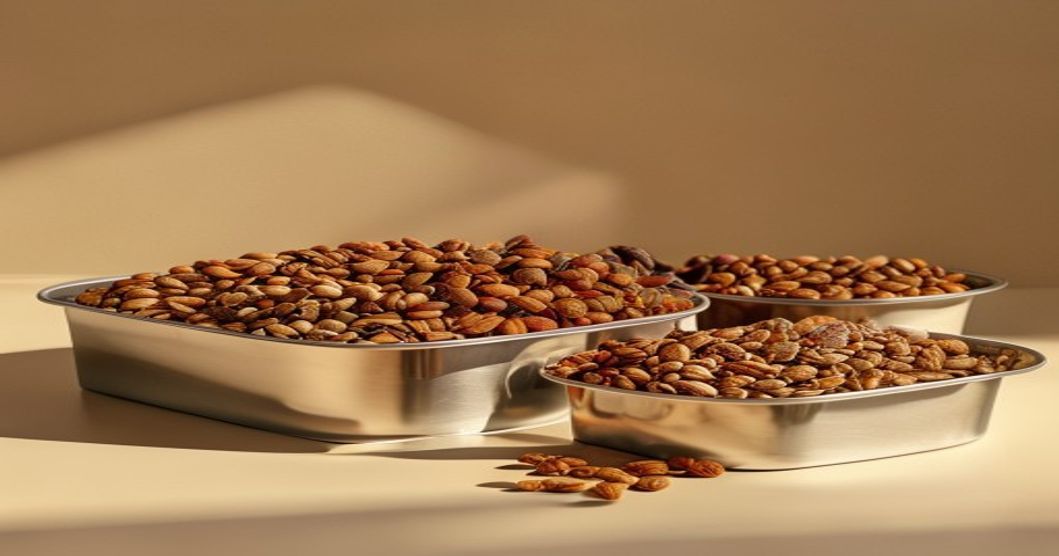
Why drink powder is one of the easiest categories to trade
If you buy and resell food products — as a wholesaler, a distributor, a vending operator, an e-commerce seller or a cafe chain's central purchasing office — the drink powder category deserves a hard look. Few product families are as logistics-friendly. Drink powder is ambient: it needs no cold chain at any point between the production line in Turkey and the shelf, machine or bar counter where it is finally used. It is dense and dry, so freight cost per kilogram of sellable product is low compared with bottled or liquid beverages, where you effectively pay to ship water. And it carries a long shelf life in unopened packaging, which means a pallet bought today does not become a write-off risk next quarter.
This guide is written for the buyer who wants to purchase finished drink powder at wholesale — ready product, in existing packaging, bought by the carton or pallet — rather than launch an own-brand line. If your project is the opposite (your logo, your recipe, your packaging), the companion piece to read is our private label drink powder guide, which walks through that project process step by step. Here we stay on the trading side: what the portfolio looks like, how wholesale differs from private label commercially, what the rising sugar-conscious demand in Germany means for your assortment, how an order actually moves from sample to delivery, and how to store the product once it lands.
Who buys drink powder at wholesale — and why
Four buyer profiles account for most of the wholesale demand we see from buyers worldwide:
Food wholesalers and distributors. You already run routes into supermarkets, ethnic grocery stores, kiosks or cash-and-carry outlets. A 13-flavour instant drink powder series slots into an existing dry-goods truck with zero extra handling requirements, and the seasonal peaks (salep and hot chocolate in winter) give your winter catalogue a strong anchor.
Vending and OCS operators. Office coffee service and vending machines run on powder economics. A 1 kg professional base — hot chocolate or chai latte, for example — is dosed by the machine, stores next to the machine at room temperature, and yields a highly predictable cost per cup. Operators typically standardise on a small number of bases across the whole machine park.
E-commerce sellers. Marketplace and webshop sellers buy retail-ready 250/300 g packs and list them directly. The category's advantages compound online: the product is light, unbreakable, and survives ordinary parcel logistics without protective packaging. In Turkey our own retail range is sold through Trendyol and shop.arovela.com, so the consumer-facing presentation of the packs is already proven in live retail conditions.
Cafe chains and foodservice groups. A chain that does not want to run a private-label project yet can still centralise its non-espresso hot beverage purchasing on wholesale 1 kg bases. Our HoReCa beverage bases sourcing guide covers that operational side — dosing, per-cup cost control, seasonal menu planning — in detail; this article covers the buying side that sits in front of it.
The portfolio: what you can actually order
Two formats, two very different resale logics.
Retail packs, 250 g / 300 g. Flavoured instant drink powders in consumer-ready packaging, sold on to end customers as-is. The flavour range: apple, black mulberry, kiwi, lemon, banana, orange, strawberry, cocoa, rosehip, cinnamon, mint-lemon, mastic salep and cinnamon salep. Thirteen flavours means a distributor can build a shelf-facing series wide enough to command a visible block in store, while an e-commerce seller can start with the four or five strongest movers and extend by reorder.
Industrial bases, 1 kg. Professional-format bases for foodservice and vending: hot chocolate, milkshake, chai latte, frappe and salep. These are dosed per serving behind the counter or inside the machine; the end customer never sees the bag, so the buying decision is entirely about performance, consistency and cost per serving.
| Format | Pack size | Flavours / varieties | Typical wholesale buyer | Resale logic |
|---|---|---|---|---|
| Retail flavoured powders | 250 / 300 g | 13 flavours (fruit, cocoa, rosehip, cinnamon, mint-lemon, two salep types) | Distributor, e-commerce seller, retail chain | Sold on as-is to consumers |
| Industrial bases | 1 kg | Hot chocolate, milkshake, chai latte, frappe, salep | Vending/OCS operator, cafe chain, HoReCa distributor | Consumed in-house or resold to venues |
Both formats come out of the same production organisation in Sındırgı, western Turkey — a facility whose wider operation is known for geothermal-energy fruit drying — under a food safety system certified to ISO 22000, with ISO 9001 quality management and ISO 27001 information security certification alongside it. Quality documentation (specification, allergen statement, lot-based analysis data) is available on request, and stating your destination market when you enquire means the document set is prepared correctly the first time. The full range is listed on our natural drink powders product page.
Wholesale or private label: which model fits you now
The most common strategic question we hear from new buyers is not about flavours — it is about the model. Should you buy the existing branded product at wholesale, or invest in an own-brand line from day one? The honest answer is that they are different tools for different stages.
| Criterion | Wholesale (buy finished product) | Private label (your brand) |
|---|---|---|
| Speed to first sale | Fast — product and packaging already exist | Slower — sampling, artwork and printing come first |
| Upfront commitment | Carton/pallet quantities, agreed per project | Larger, tied to packaging print runs |
| Margin structure | Trading margin | Brand margin, typically higher at scale |
| Brand equity built | None (you build distribution instead) | Accumulates with every unit sold |
| Recipe influence | Fixed — you choose from the range | Parameters discussed per project |
| Best suited to | Testing demand, filling a catalogue gap, vending ops | Committed brand builders with proven demand |
A pragmatic and very common path is sequential: start at wholesale, learn which flavours and formats actually move in your channel, then convert the winners into an own-brand line once the volume justifies it. Because production and private-label capability sit in the same organisation, that conversion does not require changing supplier — the sales history you build in phase one becomes the business case for phase two. The private label drink powder guide describes exactly what that second phase involves.
The sugar question: what German search demand is telling the category
If you sell into Germany or the wider DACH region, pay attention to a clear shift in consumer search behaviour: queries such as "getränkepulver ohne zucker" (drink powder without sugar) and "isotonisches getränkepulver" (isotonic drink powder) have been climbing. Sugar content has moved from a back-of-pack detail to a front-of-mind purchase criterion, pushed along by public-health campaigns and national sugar-reduction strategies across the EU.
What should a wholesale buyer do with that signal? Three practical things:
- Read labels before you list. Our current retail flavoured powders and 1 kg bases are classic sweetened recipes — that is what the salep, hot chocolate and fruit-drink traditions they come from taste like. Know the sugar values on the nutrition declaration of each SKU you carry, because your retail customers increasingly will.
- Position honestly. Do not market a sweetened classic as a health product. In the EU, nutrition claims like "sugar-free" or "no added sugars" have precise legal definitions, and the mandatory nutrition declaration on the label is governed by the EU Food Information to Consumers Regulation (EU) No 1169/2011. A wholesale reseller does not own the label, but does own the marketing copy around it.
- Route reduced-sugar demand to the right model. If your channel genuinely needs a modified sugar profile — less sweet, differently sweetened, or tuned to a specific market's taste — that is not a wholesale conversation, it is a contract manufacturing one: sweetness and recipe parameters can be discussed per project on the private-label side. In other words, the trend does not disqualify the category; it tells you which of the two models answers which slice of demand.
The strategic takeaway: the sweetened classics remain the volume engine of the category, and the sugar-conscious segment is the growth conversation to have with your supplier — in that order.
How an order runs: from sample to delivery
A disciplined wholesale purchase follows a short, predictable sequence.
Step 1 — Sample evaluation. Request samples of the specific SKUs you intend to carry and test them the way your customers will use them: the retail powders at the on-pack preparation ratio, the 1 kg bases through a real machine or bar procedure. Approve in writing what you tasted; that reference protects both sides on the first commercial order. Our B2B sample order guide sets out the full framework, including what documentation to request alongside the sample.
Step 2 — Commercial terms. Quantities are structured in cartons and pallets and agreed per project — assortment mix, delivery schedule and terms are settled at the quotation stage. Mixed-SKU pallets are a normal request for distributors building a flavour series; say so early, because it affects how the order is picked and stacked.
Step 3 — Dispatch. Goods ship either directly from the Sındırgı facility in Turkey or, for EU buyers who want shorter transit and simpler paperwork, from our warehouse in Solingen, Germany. Intra-EU delivery from Solingen means no import customs clearance on your side, which matters for smaller and more frequent replenishment orders. For direct-from-Turkey shipments, agree the Incoterm deliberately rather than by default — our FOB vs CIF guide for food shipments explains what each term really allocates to whom.
Step 4 — Receipt and reorder rhythm. Check lot numbers and date marking against the paperwork at goods-in, then let your actual sell-through set the reorder cadence. The category's long shelf life gives you room, but the seasonal curve (see below) rewards buyers who order winter stock in late summer.
Storage and shelf life: getting the simple things right
Drink powder is forgiving cargo, but it is still a hygroscopic food product — powder attracts moisture, and moisture is the one thing that genuinely degrades it. The working rules:
- Keep it dry, cool and dark. Ambient warehouse conditions are fine; what you want to avoid is humidity swings, condensation points and direct sunlight on packaging. Do not store pallets against exterior walls that sweat in winter.
- Respect the packaging. The moisture barrier of the sealed pack is doing the preservation work. Unopened product keeps its full declared shelf life; opened 1 kg bases in a foodservice setting should be resealed and used within the venue's normal rotation.
- Rotate FIFO by lot. First in, first out, tracked by lot number — elementary, but the single most common cause of avoidable date-marking losses in ambient categories is a broken FIFO discipline, not the product itself.
- Plan the season. Salep, hot chocolate and cinnamon flavours peak from November to February; frappe and milkshake carry the summer. Place winter-volume orders by late summer so production, documentation and transit never squeeze your season.
Nothing here requires special infrastructure — which is precisely the point. Compared with chilled, frozen or liquid beverage categories, drink powder lets an ordinary dry-goods warehouse and an ordinary truck deliver a fully professional result.
FAQ
Can I buy your existing branded drink powders and resell them in my market?
Yes — that is exactly what the wholesale model is. You purchase finished, packaged product in carton and pallet quantities and resell it through your own channels. If you later want the same products under your own brand, the relationship converts into a private-label project without changing supplier.
Do you offer sugar-free or isotonic drink powders?
The current retail range and 1 kg bases are classic sweetened recipes. Demand for reduced-sugar options — visible in German searches like "getränkepulver ohne zucker" — is best addressed through the contract manufacturing route, where the sweetness profile can be discussed per project. Ask us about it at the enquiry stage if it matters for your channel.
What are the minimum order quantities and prices?
Both are structured per project rather than published as a flat list, because assortment mix, destination and dispatch point (Sındırgı or the Solingen EU warehouse) all affect the calculation. Send your target SKUs and estimated volumes with your enquiry and you will receive a concrete quotation.
Which certifications and documents back the product?
The production organisation is certified to ISO 22000 (food safety), ISO 9001 (quality management) and ISO 27001 (information security). Product specifications, allergen statements and lot-based analysis data are shared on request — ask for them together with your samples so your file is complete before the first order.
Can EU buyers receive goods without handling import customs clearance?
Yes. Deliveries to EU buyers can be made from our warehouse in Solingen, Germany, as intra-EU movements — no import clearance on your side. Direct shipment from Turkey remains available where volumes or terms make it the better route.
Ready to build your assortment?
Review the full range on the natural drink powders product page, then request a quote with your target flavours, formats and estimated volumes — or contact our export team to start with samples.