Key takeaways
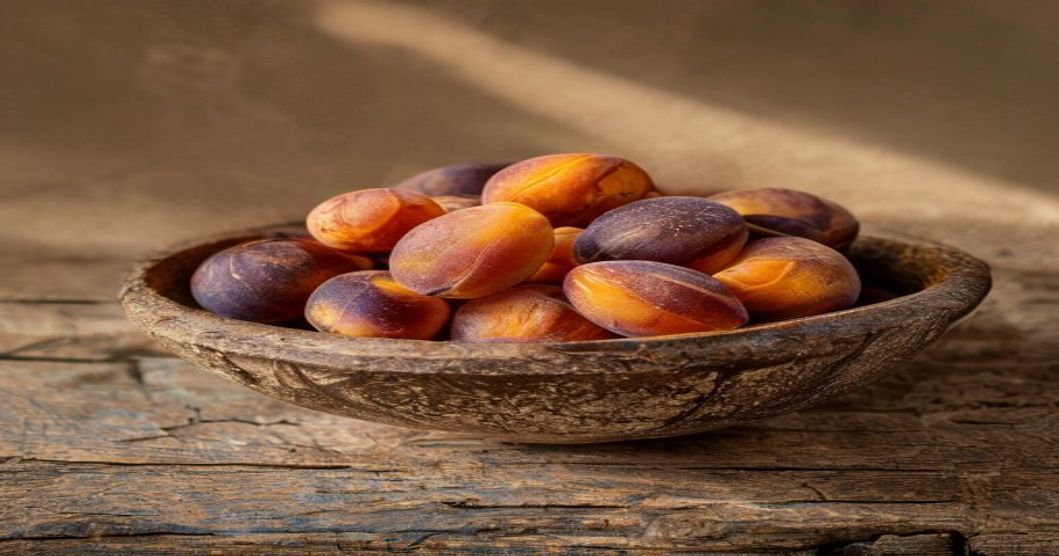
- Buying unsulphured dried apricots wholesale means sourcing fruit dried without sulphur dioxide (SO2). The colour difference is the whole story: untreated fruit oxidises to a deep amber-to-dark-brown, while the familiar bright-orange apricot has been treated with SO2 to lock in colour. Dark does not mean inferior — it means additive-free.
- Malatya, in eastern Türkiye, is the world's dominant apricot-drying origin, supplying the large majority of internationally traded dried apricots. It is the natural sourcing region for both sulphured and unsulphured grades.
- For clean-label and additive-conscious buyers, the trade-offs are concrete: no E220 on the label and no sulphite-allergen declaration, against a darker colour, a more caramelised flavour, and shelf-life and water-activity parameters you must control rather than assume.
- Always demand a per-batch Certificate of Analysis (COA) that reports residual SO2 (to prove the "unsulphured" claim), moisture and water activity, and contaminant limits — plus a spec sheet that pins down grade, calibre, and humidity.
- Arovela dries fruit geothermally and naturally, without SO2, so the product is naturally additive-free rather than chemically stripped. We supply from a Sındırgı (Balıkesir) facility with a warehouse in Solingen, Germany for short EU lead times, under ISO 22000, ISO 9001, and ISO 27001 with COA on request.
Introduction: why clean-label buyers are switching to dark apricots
For most of the last century, the "correct" dried apricot was bright orange. That colour is not natural — it is the visible signature of sulphur dioxide (SO2) treatment, a preservative and antioxidant that fixes carotenoid colour, slows browning, and extends shelf life. As clean-label, additive-conscious, and "free-from" positioning has moved from health-food niches into mainstream European retail, the conversation has flipped. More and more buyers now want unsulphured dried apricots wholesale: the same Malatya fruit, dried without SO2, with nothing to declare on the ingredient line except dried apricots.
For a procurement manager, a private-label developer, or an organic-brand buyer, the challenge is rarely "can I find dried apricots" — it is "can I find an unsulphured apricot whose darker colour my customers will accept, whose claim I can prove on paper, and whose shelf life I can stand behind." The dark colour scares buyers who do not understand it and reassures buyers who do. This guide is written to close that gap.
It explains what unsulphured really means, why the colour changes, how SO2 is regulated and labelled in the EU, the sensory and shelf-life trade-offs you are actually accepting, and which documents to demand before you commit to a pallet. If you are new to this category, start with our Malatya dried apricots B2B sourcing guide for the origin fundamentals; this article is the clean-label deep-dive that sits on top of it.
Sulphured vs unsulphured dried apricots: the distinction that matters
This is the single most important thing to understand before you place an order — and the single most common source of buyer confusion. Both products start as the same fruit, from the same orchards. The only difference is whether sulphur dioxide was applied during drying.
What SO2 actually does
Before drying, conventional apricots are exposed to sulphur dioxide — historically by burning sulphur in a closed fumigation chamber, today often via controlled SO2 gas or a sulphite dip. SO2 does three things: it acts as an antioxidant that prevents enzymatic and non-enzymatic browning, so the fruit keeps its orange carotenoid colour; it is an antimicrobial that suppresses moulds and yeasts during and after drying; and it helps retain certain vitamins, notably vitamin C. The result is the bright, uniform, translucent-orange apricot that shoppers came to recognise as "fresh-looking."
Why unsulphured apricots turn dark
Remove the SO2 and natural chemistry takes over. As the fruit dries and ages, sugars and amino acids undergo Maillard and caramelisation reactions, and polyphenols oxidise. The carotenoids are still there nutritionally, but they are masked by brown pigments. The outcome is a deep amber, russet, or near-chocolate-brown apricot with a richer, more toffee-like, slightly tangy flavour. The darkness is a sign of the absence of a chemical, not the presence of spoilage. Educating the end consumer on exactly this point is usually the make-or-break factor in a successful unsulphured launch.
Side-by-side comparison
| Attribute | Sulphured (SO2-treated) | Unsulphured (SO2-free) |
|---|---|---|
| Colour | Bright, uniform orange | Amber to dark brown |
| Process | Fumigated / dipped with SO2 before drying | Dried without any sulphur treatment |
| Flavour | Bright, fruity, tart | Caramelised, deeper, toffee-like |
| Ingredient line | Dried apricots; preservative (E220 / sulphur dioxide) | Dried apricots (single ingredient) |
| Allergen statement | "Contains sulphites" if > 10 mg/kg | None required |
| Typical shelf life | Longer, colour-stable | Shorter, colour darkens over time |
| Clean-label fit | No | Yes |
| Key COA metric | SO2 within legal limit | Residual SO2 (near-zero), water activity |
If your brand sells on clean-label, organic, additive-free, or "free-from" positioning, you want unsulphured fruit and you must brief your retail and marketing teams that dark is correct. If your customer expects a bright-orange apricot and shelf colour-stability above all, sulphured fruit still has a place — but it cannot carry a "no additives" claim. Confusing the two, or launching an unsulphured product without preparing the buyer for the colour, is the most common and most costly mistake in this category.
SO2 regulation and labelling: what clean-label buyers must know
The reason unsulphured matters commercially is not only flavour and image — it is regulation. Sulphur dioxide and sulphites are regulated food additives and declarable allergens, and that drives real labelling obligations across the EU.
SO2 is an authorised additive with legal limits
In the EU, sulphur dioxide (E220) and the related sulphites (E221–E228) are permitted food additives governed by the framework of Regulation (EC) No 1333/2008 on food additives. Maximum permitted levels are set by food category. For dried apricots and certain other dried fruit, the conventional maximum is commonly up to around 1,000–2,000 mg/kg of residual SO2 depending on the exact category, with dried apricots historically sitting at the higher end of dried-fruit allowances. The practical point for a buyer: a sulphured apricot is legal but must stay under its category cap, and an unsulphured apricot should test at or near zero — which is exactly what a COA must demonstrate.
Sulphites are one of the 14 declarable allergens
Independently of the additive limit, sulphur dioxide and sulphites at concentrations above 10 mg/kg (or 10 mg/litre) are listed among the mandatory allergens that must be declared on food sold in the EU under Regulation (EU) No 1169/2011 on food information to consumers. That means a sulphured apricot product almost always carries a "contains sulphites" statement, while a genuinely unsulphured product — tested below that threshold — does not. For brands targeting sulphite-sensitive or asthmatic consumers, this is the entire commercial rationale for going unsulphured.
Why "unsulphured" must be proven, not asserted
Because the claim is regulatory, it cannot rest on a supplier's word. A buyer should treat "unsulphured" as a specification that is verified by residual-SO2 testing on the COA, batch by batch. This protects you on two fronts: it substantiates your clean-label and allergen claims to your own customers and authorities, and it guards against accidental cross-contamination from shared lines or warehouses. If you sell into organic-certified channels, note that synthetic SO2 is generally not permitted in organic dried apricots, which is another reason the analytical proof matters.
Why source unsulphured apricots from Malatya, Türkiye
Malatya as the world's apricot capital
The province of Malatya, in eastern Anatolia, is the global heartland of dried apricots. Its high-altitude continental climate — hot, dry summers and cold winters — combined with the right soils produces apricots with the high sugar content ideal for drying, and the region accounts for the large majority of the world's dried-apricot supply. When you source dried apricots, you are almost always sourcing Malatya fruit, whether sulphured or not. For the full origin picture, see our Malatya dried apricots B2B sourcing guide.
Because Malatya supplies both grades, the region is also where the unsulphured supply chain is most mature: producers who have always made sun-dried "natural" (kayısı) apricots for the local and clean-label markets sit alongside the large sulphured-export operations. That depth of supply is what makes consistent unsulphured sourcing realistic rather than a novelty.
Drying method is the clean-label fork in the road
How the fruit is dried is what determines whether SO2 is even in the picture. Traditional sun-drying without sulphur yields naturally dark, additive-free fruit but is weather-dependent and slower. Modern controlled drying can achieve clean, hygienic, repeatable results without any sulphur treatment. Arovela uses geothermal and natural drying without SO2, which means the additive-free status is built in at the process level rather than achieved by avoiding a step that others add. To understand why the drying method is so central to quality and food safety, see our geothermal drying B2B guide.
This matters for a clean-label buyer because naturally additive-free and processed to remove an additive are different stories on a pack. An apricot that was never sulphured needs no qualification; the absence is genuine, and the COA simply confirms it.
Logistics: Türkiye plus a German warehouse
Arovela operates from a Sındırgı (Balıkesir) facility and holds stock in a warehouse in Solingen, Germany. For EU-based importers, manufacturers, and private-label buyers, the German node shortens lead times, simplifies intra-EU shipping, and reduces the customs friction of importing every order directly from outside the bloc. For the broader category context of buying dried fruit from Turkish origin, see our wholesale dried fruit Türkiye sourcing guide.
Sensory and shelf-life trade-offs you are actually accepting
Going unsulphured is a deliberate trade. Be clear-eyed about it with your team so the launch succeeds.
Colour and appearance
This is the obvious one. Unsulphured apricots are dark amber to brown and they will continue to darken over shelf life as oxidation proceeds. Your packaging, photography, and on-pack education should frame the colour as the proof of purity. Many successful clean-label SKUs put a short "why are these brown?" explainer right on the back panel.
Flavour and texture
Unsulphured fruit tastes deeper, more caramelised, and a touch tangier than the bright tartness of sulphured apricots. Texture is comparable when moisture is controlled, though natural fruit can be slightly firmer. For many premium and natural brands, the richer flavour is a selling point, not a compromise.
Shelf life, moisture, and water activity
Without SO2's antimicrobial and antioxidant action, unsulphured apricots are more sensitive and generally carry a shorter practical shelf life. The controls shift from a chemical to physical parameters: water activity (aw) and moisture content become your primary safeguards against mould, supported by clean processing, good packaging (often with a barrier film, sometimes modified atmosphere), and correct storage temperature. This is precisely why the COA's moisture/aw figures are not optional for unsulphured fruit — they are the shelf-life guarantee.
Nutrition
Nutritionally the two are similar; unsulphured apricots simply lack the added SO2 and may retain slightly less vitamin C, while delivering the same fibre, potassium, and the carotenoids that the brown pigment masks but does not destroy. The clean-label appeal is about what is absent, not a claim of superior nutrition.
MOQ, formats, and pricing drivers — what to expect
Pricing for dried apricots swings with crop year, calibre (size grade), moisture specification, and order volume, so treat any figure as indicative and confirm a current quote against your specification. As a directional guide:
| Product | Typical format | Indicative MOQ | Main price drivers |
|---|---|---|---|
| Unsulphured whole apricots (standard) | Cartons on pallet, bulk | Moderate — pallet-scale to start | Crop year, calibre, moisture spec |
| Unsulphured whole apricots (premium calibre) | Cartons on pallet | Moderate | Size grade, uniformity, origin grade |
| Unsulphured diced / pieces | Bulk cartons / bags | Moderate–higher | Cut spec, dusting agent (rice flour, etc.) |
| Private-label / retail pack | Agreed packaging | By agreement | Pack format, COA scope, label work |
Unsulphured fruit is generally priced at or slightly above comparable sulphured grades, reflecting more careful handling, tighter moisture control, and (for some buyers) organic-channel positioning rather than the additive itself. Calibre — the size grade, typically counted as apricots per kilogram — is a major price lever: larger, more uniform fruit commands a premium.
For first orders, request a sample with the COA attached (samples are free of charge; you cover the courier) so your QA team can verify residual SO2, moisture, and water activity against your spec before you commit to a full pallet. Confirm packaging (food-grade, light- and moisture-protective), Incoterms, and whether stock can ship from the Solingen warehouse for faster EU delivery. Current grades, calibres, formats, and quote requests are handled through our wholesale page.
Quality documentation: what to request before you buy
A reputable B2B supplier should provide a full document pack per batch. For unsulphured fruit, the residual-SO2 result is the headline — it is what turns your clean-label claim from marketing into substantiated fact.
Certificate of Analysis (COA) — per batch, not per product
Insist on a batch-specific COA, tied to the exact lot number you are buying. For unsulphured dried apricots the parameters that matter most are:
- Residual SO2 (mg/kg) — should be at or near zero; this is the proof of the unsulphured claim
- Moisture content (%) and water activity (aw) — the shelf-life and food-safety controls
- Calibre / count per kg and defect tolerances — the grade specification
- Microbiological limits (e.g. total plate count, yeasts and moulds, E. coli, Salmonella)
- Mycotoxins, including aflatoxins and ochratoxin A, within EU contaminant limits
- Heavy metals and, where required, pesticide residues
Regulatory and trade documents
| Document | What it confirms | Who asks for it |
|---|---|---|
| Batch COA | Residual SO2, moisture, contaminants | All food buyers |
| Specification sheet | Grade, calibre, moisture tolerances | Procurement, QA |
| Country of origin / phytosanitary | Origin (Türkiye) and plant health | Customs / importers |
| Allergen statement | Sulphite status (none, for unsulphured) | Retail & manufacturing buyers |
| Food-grade packaging declaration | Contact-material compliance | Importers / RPs |
| Organic certificate (if applicable) | Organic status of the lot | Organic-channel buyers |
A note on certifications and "organic" or other scheme claims
If your finished product is sold in the EU, it must comply with EU food-law and contaminant rules; for the maximum levels of mycotoxins and other contaminants, the consolidated reference is Regulation (EU) 2023/915 on contaminants in food. Buyers frequently also ask suppliers about organic, BRC, FSSC 22000, halal, or kosher status, because their own retail positioning may require it.
Be precise about what a supplier actually holds. Arovela's certifications are ISO 22000, ISO 9001, and ISO 27001. We dry our fruit geothermally and naturally without SO2, and we provide COA on request and the trade documentation above; we do not claim organic, BRC, FSSC, halal, or kosher certification. If your specification requires one of those scheme certificates, raise it during qualification so the right sourcing route can be confirmed rather than assumed.
Positioning unsulphured apricots at retail and in manufacturing
For private-label and retail brands
The colour conversation is everything. Lead with the clean-label story — single ingredient, no preservatives, no added sulphites — and pre-empt the colour question on the pack and in product copy. Brands that explain why the fruit is dark convert browsers into repeat buyers; brands that leave it unexplained field returns and complaints. The absent "contains sulphites" line is also a genuine selling point to the sulphite-sensitive segment.
For food manufacturers and ingredient buyers
If you are buying apricots as an ingredient — for cereals, bakery, confectionery, snack mixes, or fruit-and-nut bars — unsulphured fruit lets you keep the finished-product label clean and avoid a sulphite allergen declaration on your own pack. Watch the technical implications: the darker colour will show in the finished product, and the lower preservative load means you must respect the apricot's moisture and water-activity spec in your formulation and shelf-life testing.
When sulphured fruit still makes sense
If your customer specifically expects bright-orange apricots, prioritises maximum colour stability over additive-free status, or is buying to a legacy specification, sulphured fruit remains a legitimate choice — it simply cannot carry a clean-label or "no sulphites" claim. Match the grade to the brief.
Frequently asked questions
What are unsulphured dried apricots?
Unsulphured dried apricots are apricots dried without sulphur dioxide (SO2), the preservative used to keep conventional dried apricots bright orange. Without it, the fruit oxidises naturally during drying and ageing to a deep amber-to-brown colour and develops a richer, more caramelised flavour. The ingredient line is a single ingredient — dried apricots — with no E220 preservative and, when tested below the legal threshold, no "contains sulphites" allergen declaration. The dark colour is a sign of the absence of an additive, not of spoilage.
Why are unsulphured dried apricots brown instead of orange?
Sulphur dioxide acts as an antioxidant that locks in the orange carotenoid colour of the apricot. Remove it and natural Maillard, caramelisation, and polyphenol-oxidation reactions take over as the fruit dries and ages, producing brown pigments that mask (but do not destroy) the carotenoids. So the bright-orange apricot is the treated one, and the dark-brown apricot is the natural, additive-free one. Educating consumers on this single point is usually the key to a successful unsulphured launch.
Where can I buy unsulphured dried apricots in bulk?
Malatya, in eastern Türkiye, is the world's dominant apricot-drying origin and the natural place to source both sulphured and unsulphured grades, so a Turkish B2B supplier is the logical route. Arovela dries apricots geothermally and naturally without SO2 and supplies them, with COA on request, from a Sındırgı (Balıkesir) facility, with stock held in a Solingen, Germany warehouse for short EU lead times. You can request grades, calibres, samples, and a quote through our wholesale page or by contacting our team directly.
How can I prove dried apricots are genuinely unsulphured?
Treat "unsulphured" as a specification that is verified by residual-SO2 testing on a batch-specific Certificate of Analysis, not as a label claim you take on trust. A genuinely unsulphured lot should test at or near zero mg/kg SO2 — comfortably below the 10 mg/kg threshold that triggers the EU sulphite allergen declaration. Per-batch testing substantiates your clean-label and allergen claims and guards against accidental cross-contamination from shared lines or storage.
What shelf life and storage do unsulphured dried apricots need?
Without SO2's antimicrobial and antioxidant protection, unsulphured apricots are more sensitive and generally have a shorter practical shelf life, and they darken further over time. Shelf life is controlled through physical parameters rather than a chemical: keep moisture and water activity within spec, use light- and moisture-protective (often barrier-film or modified-atmosphere) packaging, and store cool and dry. This is why the moisture and water-activity figures on the COA are essential for unsulphured fruit — they are your shelf-life guarantee.
What quality documents and COA should I request?
Always require a batch-specific Certificate of Analysis tied to your lot. For unsulphured dried apricots that means residual SO2 (at or near zero), moisture content and water activity, calibre and defect tolerances, microbiological limits, and mycotoxins (aflatoxins and ochratoxin A) within EU contaminant limits, plus heavy metals. Alongside the COA, ask for a specification sheet, an allergen statement, country-of-origin documentation, and a food-grade packaging declaration. If your brand needs a specific scheme certificate (organic, BRC, FSSC, etc.), confirm it explicitly during supplier qualification.
Source unsulphured dried apricots wholesale with proof on every batch
Authentic Malatya dried apricots, dried without SO2 and backed by a batch COA that proves the unsulphured claim, are the difference between a credible clean-label launch and a stalled one. Arovela dries fruit geothermally and naturally, without sulphur dioxide, and supplies from a Sındırgı (Balıkesir) facility with a Solingen, Germany warehouse for short EU lead times — backed by ISO 22000, ISO 9001, and ISO 27001 documentation and COA on request.
Tell us your target spec — calibre, moisture, residual SO2, and destination market — and we will match the right unsulphured grade and the paperwork to go with it. Contact the Arovela team or request a sample and a quote through our wholesale page.