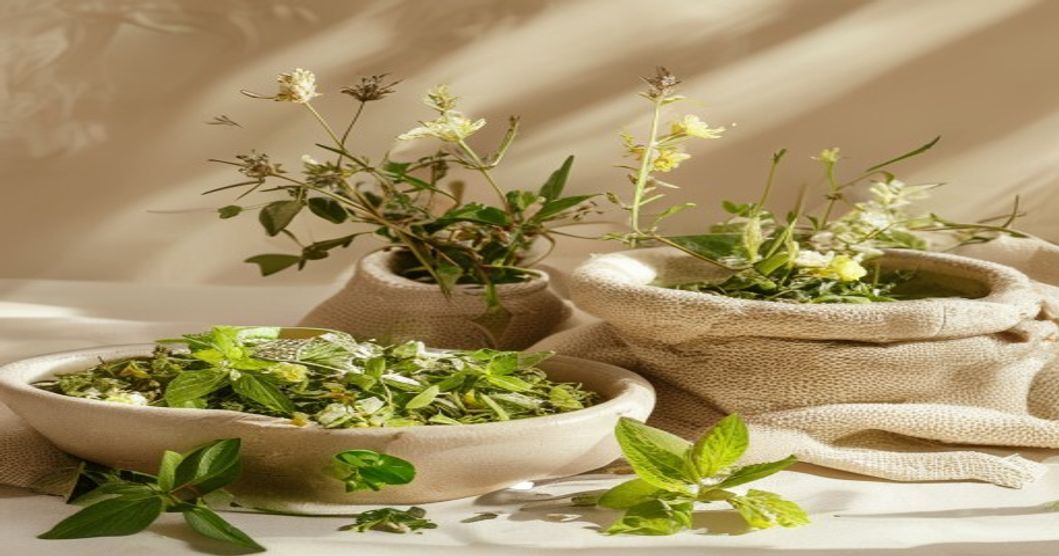
Two buyers, one category, very different jobs
A category buyer for a supermarket chain and the founder of an online tea store are both "sourcing herbal tea". Almost nothing else about their situation is the same. One is filling a shelf that has to turn at a planned rate across dozens of stores, with a listing window that opens once or twice a year and a supplier compliance file that runs to many pages. The other is filling a marketplace listing that can go live tomorrow, sells one carton at a time, and lives or dies on reviews, photography and stock cover during a fulfilment-centre stay of unknown length.
The supply side does not care about the difference — the same botanicals, the same machines and the same regulations sit behind both. But the right way to buy is different, and most of the expensive mistakes come from applying one channel's instincts to the other. This guide walks through the three supply formats, then through what each channel should specify differently.
The three formats you can buy
Bulk botanicals. Dried leaf, flower or fruit, either whole, cut and sifted, or milled to tea-bag cut, in sacks or cartons of 10–25 kg and up. You do the blending and packing, or you pass it to a co-packer. This is the format for a brand with its own production, or a retailer commissioning its own private-label programme through a separate packer. Arovela's minimum for medicinal and aromatic plants is 25 kg per SKU.
Bagged, unbranded. Finished tea bags — for the single-cup market this means tagged bags with string and label — supplied in bulk inner packs for you to carton, or in a plain carton for you to overwrap. Useful for a retailer that wants to control the outer pack and artwork but not the bagging.
Finished private label. Bagged, cartoned and labelled to your specification, delivered retail-ready. The supplier runs blend development, bagging, cartoning and the documentation behind it; you own the brand and the compliance file. For tagged bags this is a scheduled product — Arovela's tagged line produces around 1,000 bags per hour, which is enough to make lead time a planning input rather than an afterthought (a 200,000-bag first run is on the order of 25 shift-days of line time before changeovers and cartoning).
Side by side:
| Bulk botanicals | Bagged, unbranded | Finished private label | |
|---|---|---|---|
| What arrives | Dried leaf, flower or fruit in 10–25 kg sacks or cartons | Finished tea bags in bulk inner packs or plain cartons | Bagged, cartoned, labelled, retail-ready |
| Who blends | You or your co-packer | Supplier | Supplier |
| Who bags | You or your co-packer | Supplier | Supplier |
| Who cartons and labels | You | You | Supplier |
| Typical minimum | 25 kg per botanical SKU | Quoted per bag run | 5,000–20,000 bags entry tier; 50,000–100,000 at scale |
| Indicative lead time | Origin shipping only | Bagging line time plus your cartoning | 2–4 weeks entry tier, 4–6 weeks at scale, plus development |
| You need in place | Blending and packing capability | Cartoning and artwork | Artwork and a compliance file |
| Best fit | Brands with their own production | Retailers controlling the outer pack only | Supermarket private label and most online sellers |
Most supermarket private-label programmes buy the third format. Most online brands start with the third format too, then some move upstream to bulk once they have volume and a packer. Very few should start with bulk. If you are weighing whether to acquire that packing capability yourself, in-house tea bag packaging versus contract manufacturing works through the economics; how tea bag manufacturing works covers what happens on the line either way.
What the supermarket buyer should specify
Listing calendar versus lead time. Retail listing windows are fixed; tagged tea lead time is 6–10 weeks for a first run, and every subsequent replenishment needs its own slot on the line. Work backwards from the shelf date and build the line time in — a supplier who says "no problem" to a four-week first-run request for tagged bags is either running a much faster format than they have told you or has not understood the brief.
Compliance file first, price second. A retailer's supplier approval process will ask for the same documents whatever the price: certificates of analysis per lot, pesticide residue results against Regulation (EC) No 396/2005 maximum residue levels, contaminant results — heavy metals in particular — against Regulation (EU) 2023/915, microbiological results with the treatment method stated, an allergen statement covering shared equipment, organic certification to Regulation (EU) 2018/848 where claimed, and quality-system evidence. Arovela holds ISO 22000, ISO 9001 and ISO 27001; a buyer should confirm certificate scope covers the site and activity being commissioned. Get all of this in the RFQ so the approval file is building while samples are being brewed. If reading those documents is unfamiliar territory, how to read a certificate of analysis explains what each section is actually telling you, and EU food traceability and lot tracking covers the lot-code discipline that ties a COA to the cartons on your shelf.
Fill weight and net quantity. A carton labelled "20 × 2 g" is a legal commitment under Regulation (EU) No 1169/2011. Agree the target fill and tolerance in the specification and require in-process weight checks in the manufacturing record; a retailer's own QA will weigh cartons, and so will trading standards.
Range architecture. For the reasons above, tagged tea line time is consumed by changeovers as much as by volume. A range of two or three hero blends at proper volume is far easier to keep in stock, and cheaper per carton, than eight blends at low volume. If the category plan needs eight, stagger the launches.
Legal name per market. In most EU markets an infusion without Camellia sinensis is not simply "tea"; it is a herbal infusion, with wording and enforcement that vary by country. A retailer trading across several EU markets should confirm the legal name per market before artwork, not per complaint.
What the online seller should specify
Stock cover and shelf life are the same problem. Marketplace fulfilment means your cartons may sit in a warehouse for months, and you do not control the humidity. Dried botanicals are hygroscopic and lose volatile oil over time; tea-bag cut, with its large surface area, loses it fastest. Ask for the moisture and water-activity specification and the basis for the proposed best-before date, and discuss the outer barrier explicitly — an unenveloped tagged bag in a plain carton relies almost entirely on that carton and any overwrap.
Order in the format your fulfilment can actually handle. Retail-ready cartons that ship as a single unit are the least friction. If you plan to sell multipacks or sample sets, tell the supplier at specification stage — it changes the cartoning brief.
Do not skip the compliance file because nobody asked. Marketplaces increasingly ask for it, national authorities test products bought online, and the food business operator named on the pack — that is you — carries the liability whether or not anyone asked for a document at listing time. Ask for the same COA package a supermarket would — selling food online in the EU: compliance for marketplace sellers sets out what a listing has to carry.
Claims are the fastest way to lose a listing. The physiological claims that sell tea online — sleep, calm, digestion, detox, immunity — are, in the EU, either unauthorised under Regulation (EC) No 1924/2006 or, if they reference a condition, capable of turning your product into an unlicensed medicine under Directive 2001/83/EC. Sell the botanical, the origin, the aroma and the ritual; route every health-flavoured line through review before it hits the listing.
Positioning stock inside the EU. For an online brand selling into EU marketplaces from Turkish-origin product, the replenishment leg matters. Arovela produces in Sındırgı, Balıkesir, and holds an EU distribution warehouse in Solingen, Germany; drawing stock from inside the Union rather than shipping every order from origin is the difference between holding one season of cover and two.
Briefing a Turkish supplier without wasting a season
Turkey is one of the world's principal origins for the botanicals that anchor herbal infusions — sage, linden, thyme, rosehip, mint, melissa — and Anatolian material carries a recognisable aromatic intensity that blenders pay for. That makes it a natural first origin for a herbal tea programme, and it also means the brief matters more than usual, because the raw material is characterful enough to reward precision and punish vagueness.
A brief that works, in one page:
- Format: bulk / bagged unbranded / finished private label — and if bagged, the bag type (tagged with string and label, stringless, enveloped, pyramid). Confirm the supplier's line actually runs that type.
- Blend: components by Latin binomial, target cut (tea-bag cut for bagging), and any sensory reference you have — a competitor cup, a description, a sample.
- Volume and cadence: first run size and expected replenishment rhythm, so line time can be planned.
- Documentation: the full COA package listed above, per lot, plus organic or other certificates if claimed.
- Compliance context: destination markets, so legal name and origin labelling can be settled early, and who your EU-established food business operator will be.
- Pilot: an explicit request for a pilot arrangement — raw material minimums are usually firm, but pilot run sizes are frequently negotiable, and asking costs nothing.
Then brew the samples at the bagging cut, not as loose leaf, because that is what the machine will run and what your customer will taste. B2B sample order best practices covers how to structure that sampling round so the results are comparable.
When the answer is "not yet"
There is a version of this decision where the honest answer is that a private-label tea line is premature — because volume cannot yet justify tagged line time and its lead times, or because the compliance file would be built for a range that has not proven it sells. In that case a retailer or online seller is often better served by a smaller step: a single hero SKU, a modest first run under a pilot arrangement, and a plan to widen the range only once the first blend has a sales history. It is a less exciting brief and a much cheaper way to learn.
FAQ
Should a first-time buyer start with bulk botanicals or finished private label?
Finished private label, in almost every case. Bulk only works if you already have blending and packing capability, and it exposes you to the 25 kg per-botanical minimum on every component before a single bag exists. Brands that move upstream to bulk do it after they have volume, a packer and a blend with a sales history — not at launch.
How far ahead of a shelf date should a retail listing be briefed?
Work backwards from the shelf date with six to ten weeks of production for a first tagged run, and put blend development, sampling and artwork approval ahead of that. Replenishments each need their own slot on the line, so the calendar has to cover the second order as well as the first. A supplier who agrees to a four-week first run for tagged bags has either misread the brief or is quoting a different format.
What documentation should be in the RFQ rather than requested later?
Certificates of analysis per lot against the actual lot code shipped, pesticide residue results against Regulation (EC) No 396/2005 limits, contaminant results against Regulation (EU) 2023/915, microbiological results with the treatment method stated, an allergen statement covering shared equipment, and quality-system evidence with the certificate scope checked against the site and activity. Asking at RFQ stage lets the approval file build while samples are still being brewed.
Why do the SKU count and the volume matter separately?
Because tagged line time is consumed by changeovers as much as by output. Every blend switch means cleaning down, re-threading tag reels and re-qualifying fill weight. Two or three hero blends at proper volume stay in stock more reliably and cost less per carton than eight blends at low volume, so a range that needs eight is better staggered than launched at once.
Can an online listing describe a herbal tea as calming or good for digestion?
No. Those are health claims: in the EU they are either unauthorised under Regulation (EC) No 1924/2006 or, where they reference a condition, capable of reclassifying the product as an unlicensed medicine under Directive 2001/83/EC. Marketplaces remove listings over this and the liability sits with the food business operator named on the pack. Describe the botanical, the origin, the aroma and the ritual instead, and review any health-flavoured wording before it goes live.
Arovela supplies medicinal and aromatic plants, herbal blends and finished tagged tea bags from Turkey to B2B buyers across the European Union and Ukraine, alongside essential oils, extracts and geothermally dried fruit — with production in Sındırgı, Balıkesir and an EU distribution warehouse in Solingen, Germany. Whether you are a category buyer planning a listing or an online seller planning a first run, request a quote and our team will come back with pricing, minimum order quantities and lead times for your format.